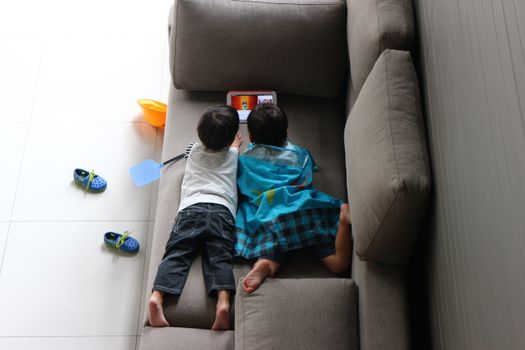
The digital age has gifted us with incredible tools for travel, but let's be honest, there's a growing fatigue. The moment a "DELAY" notification flashes across the screen, the reflex is almost universal: reach for the tablet. And while there’s certainly a time and place for screen time, what if I told you there’s a whole universe of untapped, imaginative entertainment strategies waiting to be discovered – strategies so effective, so engaging, they’ll keep your little explorers enthralled long before they become the next viral TikTok trend? Welcome to the world of "pre-mainstream" kid entertainment for travel delays, a world I stumbled into out of sheer desperation, and one that has utterly transformed our family adventures.
My moment of truth came two years ago at London Heathrow. We were en route to a much-anticipated family safari in Kenya, a trip meticulously planned for months. Our connecting flight to Nairobi was abruptly delayed by a staggering six hours due due to a "technical issue." My two kids, then aged seven and four, had already exhausted their pre-downloaded shows, devoured their snacks, and were rapidly approaching peak meltdown. The usual tricks – a new coloring book, a game of "I Spy" – felt like trying to plug a dam with a thimble. I looked around and saw a sea of glowing screens, each parent retreating into their own digital bunker. That's when I decided: no more. We needed something different, something that would not just pass the time, but truly engage and connect us, even amidst the chaos of a bustling international terminal. What followed was an impromptu "airport safari" that involved identifying all the different animal logos on airline tailfins, sketching them, and creating elaborate backstories for the passengers we saw. It was messy, it was silly, and it was glorious. It was the spark that ignited our quest for truly unique delay-busters.
So, put down the tablet, stash away the portable DVD player, and get ready to unlock a treasure trove of genuinely creative, screen-free, and often ridiculously simple ideas that will not only keep your kids entertained but might just become the most cherished, unexpected memories of your trip.
The Art of the "Micro-Adventure": Turning Delays into Discovery Missions
Forget just waiting; turn every delay into a mini-expedition! This isn't about finding the nearest play area (though those are great too!), it's about reframing the environment as a canvas for exploration.
1. The "Airport/Station Scavenger Hunt" (The Ultimate Observation Game):
This is our absolute go-to, adaptable to any travel hub. Before you even leave home, or on the fly during the delay, create a simple list of things for your kids to find. Make it visual for younger ones, text-based for older kids.
* Ideas for Airport:
* Find 5 different airline logos (bonus points for naming the country!).
* Spot someone wearing a hat, someone reading a book, someone with a blue suitcase.
* Locate a shop selling chocolate, a coffee shop, a newsstand.
* Count how many different flags you can see.
* Find a gate number higher than 50.
* My Kids' Favorite: "The 'Animal Spotter' Challenge" – my son, Leo, once spent an hour at Frankfurt Airport meticulously drawing every animal he found on a travel poster or airline logo. He discovered the Singapore Airlines' silverkriss bird, the Qantas kangaroo, and even a tiny lion on a baggage tag. The concentration was palpable, and the resulting "travel journal" was priceless.
* Ideas for Train Station:
* Find a train with a specific number.
* Spot a sign in a foreign language.
* Count how many red benches you see.
* Find a person wearing a uniform.
* Cost: Free! Just needs a pen and paper (or even a phone camera to snap findings).
* Why it's pre-mainstream: It forces active engagement with the environment, sharpens observation skills, and often sparks spontaneous learning about geography, culture, and logistics. It's a personalized quest, not a passive activity.
2. "Architects of the Terminal" (Building Beyond Blocks):
Who needs fancy toys when you have the world's most accessible building materials?
* Tips:
* Napkin Towers & Ticket Forts: Collect spare napkins, sugar packets, plastic stirrers, old boarding passes, or train tickets. Challenge your kids to build the tallest tower, the most intricate bridge, or a miniature airport terminal. My daughter, Maya, once constructed an entire "hotel lobby" out of coffee stirrers and sugar packets during a TGV delay in France. The staff at the station café were utterly charmed, bringing her extra supplies.
* Cardboard Creations: If you happen to have a small cardboard box (e.g., from a snack), it can become anything from a puppet theater to a miniature car.
* Cost: Essentially free! Just requires a little resourcefulness.
* Why it's pre-mainstream: It taps into raw creativity, problem-solving, and fine motor skills using readily available, often overlooked, materials. It's about seeing potential where others see trash.
Unleashing the Inner Performer: Improv & Imagination Games
These are the games that require absolutely no props, just minds ready to play. They encourage storytelling, empathy, and quick thinking – perfect for confined spaces.
3. "The Silent Movie Challenge" (Mime Time!):
* Tips: Give each other simple travel-related scenarios to act out without speaking.
* Examples: "You missed your flight," "You're trying to order food but don't speak the language," "You just found your lost luggage," "You're flying a plane through a storm."
* Personal Story: During a particularly long delay at JFK, we played this in a relatively quiet corner. My husband acted out being stuck in a tiny airplane bathroom, and the kids were in hysterics. It burned energy, diffused tension, and created a moment of pure, unadulterated silliness.
* Cost: Free!
* Why it's pre-mainstream: It's active, encourages non-verbal communication, and brings out the performer in everyone. It’s collaborative, not competitive, fostering family bonding.
4. "What's Their Story?" (People-Watching with a Purpose):
This is a fantastic game for older kids (5+) and adults.
* Tips: Pick a random person passing by (discreetly, of course!) and collaboratively invent their backstory.
* Questions to ask: Where are they going? What's their job? What's in their suitcase? What's their favorite food? What adventure are they on?
* Anecdote: At Dubai International, we once saw a man in a very elaborate traditional outfit. Maya, ever the dramatist, decided he was a secret prince on a quest to find a magical carpet, and his suitcase was full of rare spices. Leo, more practical, thought he was a famous chef traveling to judge a cooking competition. It sparked a hilarious debate and hours of imaginative play.
* Cost: Free!
* Why it's pre-mainstream: It develops empathy, observational skills, and narrative creation. It turns passive waiting into an active, shared storytelling experience.
The "Analog Arsenal": Low-Tech Wonders for High-Stress Moments
These are the small, portable items that aren't screens, aren't giant toy sets, and offer hours of focused, creative play. Think beyond the basic coloring book.
5. "Pocket-Sized Science & Art Kits" (Tiny Tools, Big Discoveries):
These inexpensive, compact items can unlock a world of exploration.
* Tips:
* Magnifying Glass & Small Jar: A small, child-safe magnifying glass (often under $5) can turn dust on the floor into "alien landscapes," or allow kids to examine the intricate patterns on a fellow passenger's scarf. A tiny, empty plastic jar (like a travel-sized shampoo bottle, cleaned) can be used to "collect" imaginary specimens.
* Origami Paper & Simple Instructions: A small pad of origami paper (available for $5-$10 online or at craft stores) and a print-out of 3-4 simple animal or object folds (e.g., a bird, a boat, a box) can provide incredible focus. The sense of accomplishment from creating something tangible is huge.
* Blank Postcards & Pens: Carry a stack of blank postcards (you can buy packs of 20-50 for under $10) and a small set of colored pens. Kids can draw what they see, create "future travel plans," or even write messages to send to family later. We always carry stamps for the country we're in, so they can actually mail them from the airport/station!
* Personal Experience: During a particularly rough patch of turbulence (which felt like a mini-delay in the air!), Leo pulled out his small magnifying glass and started inspecting the seat fabric, then his own hand. Maya, meanwhile, was meticulously folding a paper crane, completely oblivious to the bumps. These simple tools were their anchors.
* Cost: Minimal upfront investment (under $20 for a basic kit).
* Why it's pre-mainstream: These items encourage focused, tactile engagement and develop fine motor skills without relying on batteries or apps. They offer open-ended play rather than prescribed outcomes.
Turning Delays into Learning Labs: Educational Play
Who says learning can't happen when you're stuck? These games subtly weave in educational elements, making the delay productive.
6. "The Currency Detective & Language Explorer" (Global Learning on the Go):
* Tips:
* Currency Detective: If you're in an international airport, walk past duty-free shops. Challenge older kids to identify different currencies they see on display or in people's hands. Discuss what countries they come from. You can even bring a few different foreign coins/bills from past trips for them to examine.
* Language Explorer: Look for signs in foreign languages. Can you guess what they mean? Can you find the word for "exit" or "toilet"? If you have a phrasebook, teach them 2-3 simple words in the local language (e.g., "hello," "thank you," "please"). My kids love trying out their new words on airport staff – usually resulting in big smiles!
* Anecdote: We once had a four-hour layover at Narita Airport in Japan. With a small Japanese phrasebook, we learned to count to ten and say "arigato." The kids then "practiced" their new words on every vending machine and friendly staff member they encountered. It turned a potentially dull wait into an exciting cultural immersion.
* Cost: Free, or the cost of a small phrasebook (under $15).
* Why it's pre-mainstream: It's experiential learning, connecting directly to the travel environment. It fosters cultural curiosity and practical communication skills, making the world feel more accessible.
The "Social Butterfly" Strategy: Engaging with the Environment (Safely)
This approach encourages interaction with the surroundings and other people, fostering kindness and observation (always with parental supervision and discretion, of course!).
7. "Kindness Missions & Observation Games" (Making Connections):
* Tips:
* Kindness Missions: Encourage your kids to perform small acts of kindness. Draw a quick "thank you" picture for a gate agent who's been particularly helpful, offer a smile to a frazzled parent, or simply practice good manners by holding a door for someone.
* Observation Games (Advanced): Beyond basic "I Spy," try "Find someone who looks like they're going on an adventure," or "Find someone who looks like they're coming home." Discuss what makes you think that.
* "Mini Interviewer" (for older, confident kids with supervision): If the opportunity arises and with your explicit permission and presence, an older child might ask a flight attendant or train conductor a very simple, pre-approved question about their job. "What's the best part of your job?" or "Where's the furthest you've traveled today?" This is rare, but can be incredibly memorable and confidence-boosting.
* My Experience: During a flight delay at Charles de Gaulle, my son, Noah, drew a picture of a plane with a heart for our gate agent, who looked utterly exhausted. Her face lit up, and she chatted with him for a few minutes, making his day. It was a beautiful reminder that a little kindness goes a long way, especially when everyone is stressed.
* Cost: Free!
* Why it's pre-mainstream: It shifts the focus from self-entertainment to engagement with the wider world, fostering empathy, social skills, and a sense of connection during potentially isolating moments.
---
The next time that dreaded "DELAY" message appears, don't despair. See it as an invitation – an unexpected gift of time to connect, create, and explore in ways you might never have considered. These "pre-mainstream" strategies aren't just about killing time; they're about transforming potentially stressful moments into cherished memories, fostering creativity, and deepening family bonds. They teach our kids resilience, adaptability, and the joy of finding adventure even in the most mundane of places.
So, pack a small bag of these analog wonders, arm yourself with a spirit of imagination, and get ready to turn every travel hiccup into an unforgettable part of your journey. Your kids will thank you, and you might just find yourself enjoying the delays as much as the destination.
What are your go-to, unique delay-busting strategies that haven't hit the mainstream yet? Share your genius tips in the comments below! Let's build a community of creative travel parents. Don't forget to bookmark this post for your next trip, and follow Tripsora for more innovative travel hacks!