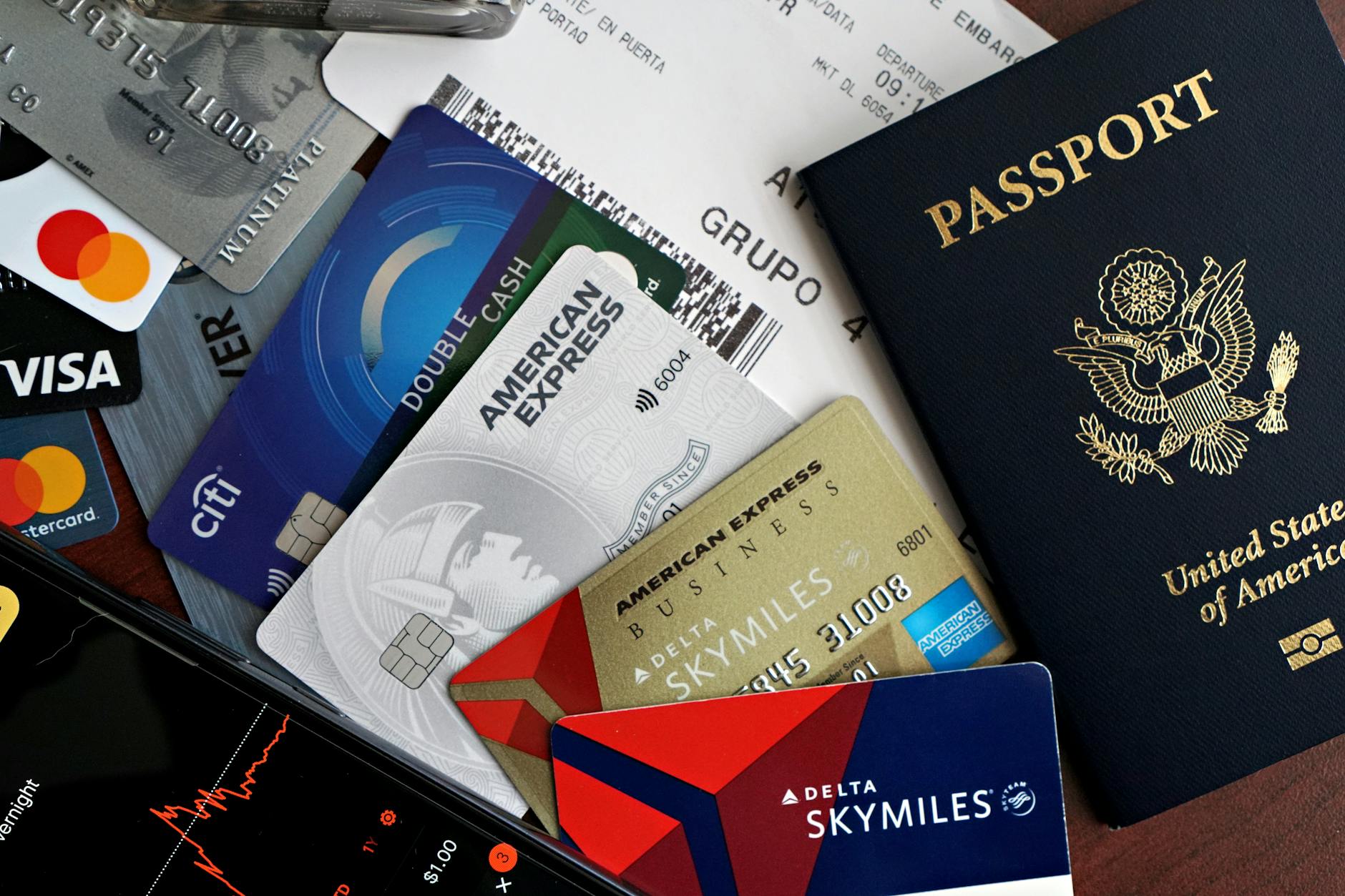
The Secret Language of Travel: How to Fly Free Using Points Locals Don't Want You to Know About
I still remember the look on my friend's face. We were planning a trip to Thailand, dreaming of Phuket beaches and Bangkok street food. He was meticulously scrolling through flight comparison sites, groaning at the $1,200 price tag for economy. I, meanwhile, was casually booking my business class seat for just $180 in taxes and a handful of points. His jaw practically hit the floor. "How do you do that?" he demanded. "Are you secretly a millionaire?"
Nope. Just a Tripsora blogger who's learned to speak the secret language of travel – the language of points. And trust me, it’s a language many locals have mastered to fly for next to nothing, a skill they often keep close to their chest, away from the tourist crowds. But today, my friends, I’m pulling back the curtain.
This isn't about finding a cheap fare sale once a year. This is about building a sustainable, repeatable system to unlock "free" flights to virtually any destination. It's about understanding the subtle nuances of loyalty programs, the hidden value in your everyday spending, and the sweet spots that only true insiders know. Forget what you think you know about points; we're diving deep into the local playbook.
1. The Mindset Shift: Why "Free" Isn't What You Think (And Why Locals Get It)
Let's get one thing straight: "Free" in the world of points usually means you're paying with a currency you've earned, not with actual cash from your wallet. It's like working hard for a bonus, then using that bonus to buy something you really want. The initial investment of effort (and responsible spending) is what makes the reward so sweet.
Locals understand this implicitly. They don't see points as "magic money" that appears out of thin air. They see them as a strategic asset, a secondary currency earned through their regular lives. They optimize their spending, their banking, and even their shopping habits to accumulate these points, knowing that each one is a step closer to their next adventure.
My Anecdote:
I used to think points were just for business travelers who flew every week. But then I met a local in Buenos Aires who flew to Europe every year to visit family, always in business class. He worked a regular job, but he'd meticulously planned his credit card strategy for years, funneling all his expenses through cards that earned him maximum value. He taught me that it's not about how much you spend, but how you spend it. This was my "aha!" moment. It wasn't about being rich; it was about being smart.
Actionable Tip:
Start by tracking your monthly expenses. Where does your money go? Groceries? Utilities? Dining out? This audit will be your blueprint for choosing the right points-earning strategies.
2. Credit Card Alchemy: Beyond the Sign-Up Bonus (The Local's Edge)
Everyone knows about credit card sign-up bonuses. Apply for a card, spend X amount in Y months, get Z points. That's beginner stuff. Locals, the true masters, go far beyond this. They see credit cards as sophisticated tools in a long-term strategy.
- Strategic Card Churning (Responsibly!): This isn't about opening dozens of cards haphazardly. It's about understanding the "ecosystems" – Chase Ultimate Rewards, American Express Membership Rewards, Citi ThankYou Points, Capital One Miles. Locals strategically open cards within these ecosystems, collecting bonuses and then leveraging the powerful transfer partners. They know which cards offer the best return for their specific spending patterns (e.g., 4x points on groceries, 3x on dining). They also understand the "rules" (like Chase's 5/24 rule) to maximize their eligibility.
- Maximizing Category Bonuses: Why use a flat 1x points card for groceries when you have one that gives 4x? Locals know their cards inside out. They'll use one card for dining, another for gas, another for online shopping, ensuring every dollar spent earns the maximum possible return.
- Referral Bonuses: This is a goldmine. Many credit card companies offer points for referring friends. If you've got friends and family interested in travel, referring them can net you tens of thousands of points without spending an extra dime. Locals often have a small network they discreetly refer to each other.
- Everyday Spending Optimization: From paying rent (if possible, through services like Bilt Rewards) to utilities, insurance, and even taxes (often with a small fee, but sometimes worth it for a large points haul), locals funnel everything they can through their best points-earning cards.
My Anecdote:
My friend in Tokyo, a self-proclaimed "points ninja," once showed me his card wallet. He had four different cards, each color-coded for its primary use: blue for groceries (Amex Gold), red for dining (Chase Sapphire Reserve), green for travel (Venture X), and black for everything else (a general 2x points card). He never left home without this arsenal, ensuring every yen spent was working for him. He even paid his monthly train pass with a points-earning card!
Actionable Tip:
Research the "trifecta" or "quadfecta" strategies for major points ecosystems (Chase, Amex). These involve combining 2-4 cards from the same bank to maximize earning across different categories and unlock premium redemption options.
3. Loyalty Ladder Climbing: Unlocking Elite Status Without Flying (The Secret Backdoors)
Elite status with airlines isn't just for road warriors anymore. While it traditionally requires flying tens of thousands of miles, locals have found clever ways to bypass the endless hours in the air. Why? Because elite status often means free checked bags, priority boarding, lounge access, and even complimentary upgrades – all things that make "free" flights even sweeter.
- Credit Card Status Boosts: Many airline co-branded credit cards offer status-qualifying miles or segments just for meeting spending thresholds. Some even grant automatic lower-tier status. Locals know which cards offer these perks and strategically use them.
- Status Matches & Challenges: If you have elite status with one airline or hotel chain, you can often "status match" to a competing airline. Airlines want to poach high-value customers. Locals leverage this, especially during promotional periods, to jump tiers without flying.
- Hotel Points Conversion (Sometimes): While less common for direct status, some hotel loyalty programs have partnerships with airlines that allow point transfers or even reciprocal status benefits. It's a niche play, but a local knows these hidden connections.
My Anecdote:
I was once flying domestically in the US on a "free" award ticket, and thanks to a status match I'd done years ago, I was automatically upgraded to first class. The guy next to me, who had paid cash for his first-class ticket, was asking me about my "business trip." I just smiled and said, "Something like that." This small perk, earned without flying, made the journey infinitely more comfortable.
Actionable Tip:
If you have elite status with any travel provider (hotel, rental car, another airline), check their status match policies. You might be surprised at the reciprocal benefits you can unlock.
4. The Art of Redemption: Finding the "Sweet Spots" Locals Guard
Earning points is only half the battle. Redeeming them for maximum value is where the true local genius shines. This isn't about clicking "use points" on your airline's website; it's about understanding transfer partners, alliance networks, and the infamous "award chart sweet spots."
- Understanding Transfer Partners: This is the biggest secret. Most flexible points (Chase, Amex, Citi, Capital One) can be transferred to various airline and hotel loyalty programs. The trick is knowing when and where to transfer for the best value. For example, transferring Chase Ultimate Rewards to United can be great for domestic flights, but transferring to Singapore Airlines (a Star Alliance partner with United) might get you a better deal on the exact same United flight or a fantastic premium cabin experience on Singapore Airlines itself.
- Alliance Networks: Airlines belong to alliances (Star Alliance, SkyTeam, Oneworld). This means you can often book flights on a partner airline using the points of another airline in the same alliance. Locals know that booking a flight on Lufthansa (Star Alliance) through United MileagePlus might be cheaper than booking it directly through Lufthansa's own program.
- Award Chart Sweet Spots: These are the holy grail. Airlines sometimes have fixed award charts where certain routes or regions require a disproportionately low amount of points. These are often on partner airlines or for specific cabin classes.
- Example 1 (Japan): ANA (Star Alliance) is famous for its incredible business and first-class award availability and relatively low point requirements, especially when booked round-trip. Locals in Japan, or those with strong ties there, know that transferring Amex points to ANA can get you from the US to Tokyo in business class for as little as 75,000-95,000 points roundtrip, a flight that could cost $5,000-$10,000 cash!
- Example 2 (Europe): Flying within Europe using British Airways Avios (Oneworld) on partner airlines like Iberia or Finnair can be incredibly cheap for short-haul flights. A local in London might use Avios to hop to Paris or Amsterdam for just a few thousand points.
- Example 3 (South America): Using American Airlines AAdvantage miles to fly on LATAM (a former Oneworld partner, but still has some reciprocal agreements) within South America can yield fantastic value for regional travel.
- Avoiding Dynamic Pricing: Many airlines have moved to dynamic pricing for award flights, meaning the points cost fluctuates with the cash price. Locals know which airlines still offer fixed award charts or have specific sweet spots that are less susceptible to dynamic pricing. They also know that booking far in advance or very last minute can sometimes reveal hidden availability.
- The Power of Off-Peak: Just like cash fares, award flights are cheaper during off-peak seasons. Locals, with their flexible schedules, often plan their "free" trips during these times to stretch their points further.
My Anecdote:
My most epic "free" flight was from San Francisco to Sydney in Qantas First Class. I transferred Amex points to Cathay Pacific (a Oneworld partner with Qantas) and booked the Qantas flight through their program. The cash price was over $15,000. My cost? About 120,000 points and $200 in taxes. It wasn't advertised anywhere; it was a known sweet spot within the Oneworld alliance that a friend (a local points expert in Sydney) tipped me off to. I'm talking pajamas, caviar, and a lie-flat bed for what felt like pocket change. Pure magic.
Actionable Tip:
Familiarize yourself with the transfer partners of your primary points currency. Then, research "award charts" and "sweet spots" for those airline partners. Websites like AwardHacker.com or Point.me can be great starting points, but always cross-reference with the actual airline programs.
5. Beyond Flights: Maximizing Your Ecosystem (Hotels, Car Rentals, Experiences)
While this post is focused on flights, locals understand that points are an ecosystem. Saving on one aspect of travel frees up cash for another, or allows you to splurge on an experience.
- Hotel Points for Flight Savings: Sometimes, the best way to get a "free" flight is to pay cash for it, but use points to cover your expensive hotel stay. A free week in a luxurious hotel can save you hundreds, if not thousands, of dollars, allowing you to allocate that cash to a flight.
- Car Rental Partnerships: Many credit cards offer elite status or discounts on car rentals. Some points programs even allow direct redemption for car rentals.
- Experiences: Some flexible points programs (like Amex Membership Rewards or Chase Ultimate Rewards) allow you to redeem points for experiences, tours, or even gift cards. While not always the highest value, it can be a nice perk if you have surplus points.
My Anecdote:
For my trip to Rome, I found a decent cash fare for my flight. But instead of paying for a hotel, I used my Marriott Bonvoy points (earned through a credit card bonus and everyday spending) for five nights at a beautiful hotel near the Pantheon. This saved me over $1,500, essentially making the entire trip feel "free." The cash I saved went straight into delicious pasta and tours of ancient ruins.
Actionable Tip:
Don't put all your points eggs in one basket. Diversify your points portfolio across airlines and hotels to give yourself maximum flexibility.
6. Advanced Playbook: The Niche Hacks (The Deep Dive Locals Take)
Once you've mastered the basics, there are even deeper layers to points accumulation that locals exploit.
- Shopping Portals: Before you buy anything online, check cashback or points portals like Rakuten (which can earn Amex Membership Rewards points), airline shopping portals (e.g., United MileagePlus Shopping), or bank portals. You can earn extra points on purchases you were going to make anyway.
- Dining Programs: Link your credit cards to airline dining programs (e.g., AAdvantage Dining, MileagePlan Dining). When you eat at participating restaurants, you automatically earn points. It's passive earning for something you already do.
- Manufactured Spending (Use with Caution & Ethics): This is a more advanced and sometimes controversial technique. It involves using credit cards to buy easily convertible items (like gift cards) that can then be used to pay bills or be liquidated for cash, allowing you to meet spending thresholds or earn large amounts of points without significant actual purchases. Always research thoroughly and understand the risks before attempting this. Many banks have cracked down on this, and it can lead to account closures if done improperly or excessively. Locals who engage in this are highly discreet and knowledgeable.
- Family Pooling: Some programs allow you to pool points with family members, which can be great for consolidating smaller balances into one large redemption.
- Promotional Offers: Keep an eye out for targeted promotions, like bonus points for adding an authorized user, spending a certain amount at specific merchants, or transfer bonuses (e.g., "Get 25% extra points when you transfer from Amex to Virgin Atlantic").
My Anecdote:
I once needed to meet a large spending bonus on a new credit card quickly. I knew I had a major home renovation coming up, so I purchased a large amount of Home Depot gift cards through an airline shopping portal that offered 5x points and a 2x bonus for a limited time. I earned enough points for a round-trip flight to Europe just from buying gift cards for purchases I already had planned. It was a perfectly legitimate way to stack earnings.
Actionable Tip:
Sign up for email newsletters from your favorite points programs and travel blogs. This is how you'll hear about limited-time transfer bonuses and other lucrative promotions.
Your Journey to Free Flights Starts Now!
The world of points and miles can seem daunting at first, but it's fundamentally about strategic thinking and consistent effort. Locals aren't born knowing these secrets; they learn them, adapt them, and refine them over time. Now, you're armed with their playbook.
Start small. Get one great travel credit card. Understand its earning categories and transfer partners. Plan your spending. Look for those sweet spots. Soon, you'll be the one casually booking business class to Bali while your friends are still agonizing over economy fares. The world is waiting, and it's much more accessible when you know how to unlock "free" flights.
This isn't just about saving money; it's about gaining freedom. The freedom to explore more, to experience luxury you never thought possible, and to truly live out your travel dreams. So, what are you waiting for? Your next adventure is just a point transfer away.
What's your biggest points and miles win? Share your stories and tips in the comments below! Let's inspire each other to fly free!
---