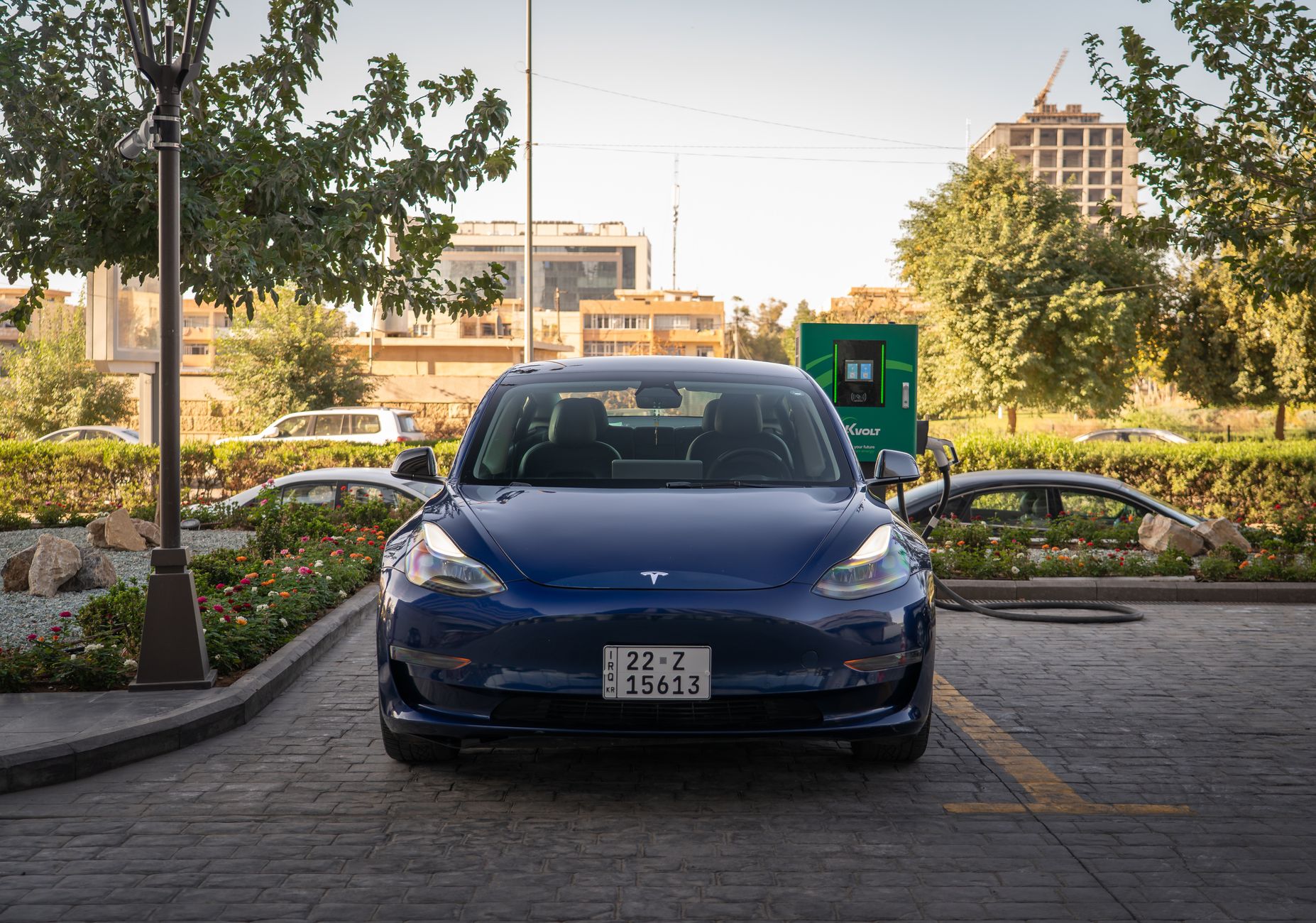
The Silent Revolution: Why Electric Vehicle Road Trips Becoming Possible Emerging This Year Changes Everything
I stepped off the gravel shoulder at 6,200 feet up on California’s Highway 395, and the first thing that hit me was the silence. No ticking, cooling engine block. No lingering whiff of unburnt diesel. Just the sharp, resinous smell of Jeffrey pines, the cool alpine breeze whistling off the Sierra crest, and the quiet clack-click of a 350kW liquid-cooled charging cable locking into my vehicle's charge port.
Three years ago, driving an electric vehicle across remote desert passes or mountain highways required military-grade tactical planning, three separate phone apps, and a prayer that a lone 50kW plug in a dark hotel parking lot wouldn't be out of order.
That era is dead.
With universal adapter standards, federal fast-charging corridor investments, and battery preconditioning tech maturing, long-distance electric vehicle road trips are transforming from a niche challenge into the premier way to see the world. We have crossed the threshold where high-speed charging infrastructure finally matches the range of modern EVs. You can now pull up to remote trailheads, coastal crags, and alpine passes, plug in for twenty minutes while you grab a pour-over coffee, and hit the road with 200 fresh miles in the pack.
Here is how to take full advantage of this new era of zero-emission exploration.
---
The 3 Game-Changers Unlocking EV Road Trips Right Now
```
+-------------------------------------------------------------------------+
| THE NEW ERA OF EV ROAD TRIP INFRASTRUCTURE |
+-------------------------------------------------------------------------+
| OLD WAY (Pre-2024) | NEW WAY (This Year) |
+--------------------------------------+----------------------------------+
| Single-network walled gardens | Open NACS/CCS cross-compatibility|
| 50kW - 150kW "Fast" chargers | 350kW liquid-cooled hyper-chargers|
| Urban-focused charging hubs | National Park & wilderness corridors|
| Manual route math & guesswork | Automated real-time route planning|
+--------------------------------------+----------------------------------+
```
1. The Interoperability Breakthrough
The walls surrounding proprietary charging networks have collapsed. Major automakers have adopted unified standards, granting non-Tesla drivers access to tens of thousands of Supercharger stalls via NACS adapters, while Tesla owners gain seamless access to CCS networks like Electrify America and EVgo. You no longer need to plan your route around which brand built the plug; you simply plan around where you want to eat lunch.
2. High-Power Corridor Deployment
Governments and private networks have systematically filled the "charging deserts" along major transit lines. Interstates like I-80, I-10, and I-95—along with regional scenic routes like the Blue Ridge Parkway and Australia's Pacific Highway—now feature high-power DC fast-charging plazas spaced every 30 to 50 miles.
3. Megawatt-Class Speed and Thermal Preconditioning
Modern 800-volt vehicle architectures can draw power at speeds up to 320kW. When paired with smart route planners that automatically warm or cool the battery prior to arrival, a 10% to 80% charge takes less time than it takes to use a restroom and grab an espresso.
---
Route 1: The Electrified American Southwest (Las Vegas to Moab)
- Distance: ~680 miles
- Ideal Duration: 5–7 Days
- Charger Density: High (DC Fast Chargers every 40–60 miles)
```
[Las Vegas] ---> (I-15 / 160 mi) ---> [St. George] ---> (UT-9 / 40 mi) ---> [Zion National Park]
|
[Moab / Arches] <--- (US-191 / 110 mi) <--- [Capitol Reef] <--- (UT-12 / 120 mi) <---+
```
This classic red-rock pilgrimage used to terrify EV drivers due to massive elevation gains and heat-induced battery drain. Today, it is one of the easiest high-adventure EV routes on the planet.
The Itinerary
Start in Las Vegas with a 100% state of charge (SoC). Cruise northeast along I-15 into Utah, stopping at the high-power charging hub in St. George. From St. George, take Highway 9 straight into Zion National Park. Springdale (the gateway town to Zion) now features dozens of Level 2 destination chargers across its lodge properties, allowing you to charge overnight while you sleep.
From Zion, hit Scenic Byway 12—one of the most visually stunning drives in North America—heading toward Capitol Reef National Park. Stop in Escalante to top off at local community fast chargers. Finish your journey by cruising into Moab, the gateway to Arches and Canyonlands, where multi-standard fast-charging plazas sit within walking distance of local smokehouses and microbreweries.
> Pro-Tip: When descending from high-altitude passes like Utah's Boulder Mountain (9,600 ft), select maximum regenerative braking mode. You can routinely generate 5% to 8% of your battery's total capacity on long downhill stretches without touching the brake pedal once.
---
Route 2: The Canadian Rockies Express (Calgary to Vancouver)
- Distance: ~600 miles
- Ideal Duration: 4–6 Days
- Charger Density: Moderate-High (High-speed chargers along Trans-Canada Highway)
```
[Calgary] ---> (Trans-Canada Hwy / 80 mi) ---> [Banff] ---> (Hwy 93 / 180 mi) ---> [Revelstoke]
|
[Vancouver] <--- (Coquihalla Hwy / 240 mi) <--- [Kamloops] <--- (Hwy 1 / 90 mi) <------+
```
Driving through the jagged spine of Western Canada's mountains long meant carrying anxiety alongside your emergency gear. Thanks to Canada’s Electric Highway initiative, mountain EV driving is a smooth, quiet joy.
The Itinerary
Depart Calgary along the Trans-Canada Highway (Highway 1), watching the flat prairies abruptly give way to the soaring limestone walls of Banff National Park. Plug into fast chargers in Banff townsite while touring the historic Banff Springs Hotel.
Head west over Kicking Horse Pass into British Columbia. Electrify Canada and BC Hydro have established strategic fast-charging hubs in mountain towns like Golden, Revelstoke, and Kamloops. Take advantage of the long charging stops in Revelstoke to sample fresh hand-rolled bagels at La Baguette (just two blocks behind the main charging station on Victoria Road).
Finish the drive down the steep, sweeping Coquihalla Highway into Vancouver, letting your battery harvest kinetic energy as you descend into the Fraser Valley.
> Pro-Tip: Cold mountain temperatures reduce battery efficiency by up to 20%. Always set your vehicle's native navigation system to your destination charger at least 30 minutes before arrival; this triggers automatic battery preconditioning, ensuring you hit maximum kW charging speeds the moment you plug in.
---
Masterclass: The Tech Stack You Need Before Hitting the Road
To make long-distance electric travel completely seamless, clear your home screen of generic navigation tools and install these essential apps:
```
+-------------------------------------------------------------------+
| THE ULTIMATE EV ROAD TRIP TECH PACK |
+-------------------------------------------------------------------+
| APP | PRIMARY USE CASE |
+--------------------------+----------------------------------------+
| A Better Routeplanner | Complex routing based on elevation, |
| (ABRP) | weather, payload, and battery temp. |
+--------------------------+----------------------------------------+
| PlugShare | User-crowdsourced station reviews, |
| ` | real-time plug functional status. |
+--------------------------+----------------------------------------+
| Tesla App | Accessing unlocked Supercharger |
| | network stalls for non-Tesla EVs. |
+--------------------------+----------------------------------------+
| Electrify America / | Direct network control, RFID tap |
| EVgo / ChargePoint | payment, live plug availability. |
+--------------------------+----------------------------------------+
```
1. A Better Routeplanner (ABRP)
While Google Maps and Apple Maps have improved their EV routing, ABRP remains the gold standard for enthusiast drivers. It factors in vehicle weight, roof rack drag, ambient temperature, headwind, and real-time elevation changes to project your state of charge upon arrival with pinpoint accuracy.
2. PlugShare
Never pull up to a dead charger again. PlugShare relies on an active community of EV drivers who upload photographs, check-in reports, and "PlugScores" for individual charging locations. If a charging plaza has a score below 7.0, skip it and target the next hub on your route.
3. Dedicated Network Apps & RFID Cards
Download the core provider apps—Electrify America, ChargePoint, EVgo, Flo, and Tesla—and set up your billing information before you leave home. For remote areas with poor cellular service, order physical RFID payment cards from providers like ChargePoint and Shell Recharge so you can tap-to-charge even without a phone signal.
---
Battery Management Blueprint: Driving Range vs. Charging Speed
The biggest mistake new EV road-trippers make is trying to charge their battery to 100% at every stop.
Due to the lithium-ion charging curve, an EV charges fast between 10% and 80%, but slows down significantly past 80% to protect battery chemistry.
```
CHARGING SPEED vs. BATTERY STATE OF CHARGE (SoC)
-----------------------------------------------------------------
10% - 80% SoC : [===========================> ] HIGH SPEED (150-350 kW)
80% - 100% SoC: [ =======>] SLOW SPEED (15-45 kW)
-----------------------------------------------------------------
STRATEGY: Arrive low (10-15%), charge to 70-80%, unplug, and roll!
```
The 10-to-80 Rule
To minimize total travel time:
1. Arrive at fast chargers with a low state of charge (10% to 20%).
2. Fast charge up to 70% or 80%—the optimal range of your battery's intake curve.
3. Unplug as soon as the charging speed drops below 50 kW.
4. Drive to the next station and repeat.
Taking two quick 20-minute charges is almost always faster than sitting at a single charger for 65 minutes trying to reach 100%.
---
EV Road Trip Logistics & Expense Cheatsheet
```
+-------------------------------------------------------------------------------+
| LOGISTICS & COST ESTIMATIONS (USD) |
+-------------------------------------------------------------------------------+
| EXPENSE CATEGORY | ESTIMATED COST | SAVINGS STRATEGY |
+-------------------------+-----------------------+-----------------------------+
| DC Fast Charging | $0.35 - $0.55 / kWh | Utilize hotel overnight |
| (Per 1,000 miles) | ($45 - $70 total) | Level 2 charging (free). |
+-------------------------+-----------------------+-----------------------------+
| Overnight Destination | $0.00 | Book hotels with bundled |
| Charging | (Included in stay) | charging amenity access. |
+-------------------------+-----------------------+-----------------------------+
| NACS / CCS Adapters | $150 - $250 | Purchase factory-approved |
| (One-time purchase) | (Single purchase) | adapters only for safety. |
+-------------------------+-----------------------+-----------------------------+
| National Parks Pass | $80 | Saves entry fees at all |
| (America the Beautiful)| (Annual pass) | federal park locations. |
+-------------------------+-----------------------+-----------------------------+
```
How to Get There & Rental Guidelines
* Renting an EV: If renting via Hertz, Avis, or Turo, opt for long-range variants (e.g., Tesla Model 3/Y Long Range, Hyundai Ioniq 5, Polestar 2, or Kia EV6).
* Confirm Adapter Inclusion: Ask the rental agent if the car includes an NACS-to-CCS adapter or a standard Level 2 J1772 adapter cable in the trunk.
* Best Time for Road Trips: Shoulder seasons (May–June and September–October) offer ideal temperatures, maximizing battery efficiency while avoiding peak park crowds.
---
5 Rules of EV Road Trip Etiquette
To keep the road trip experience clean and accessible for everyone, follow these unwritten rules of the plug:
- Don't Squat at the Stall: Move your vehicle as soon as charging reaches your targeted limit. Charging networks charge steep "idle fees" (up to $1.00 per minute) once charging stops.
- Match Vehicle Capacity to Charger Speed: If your vehicle maxes out at 50kW charging speeds (like a Chevy Bolt), do not park at a 350kW ultra-fast charger if a 150kW or 50kW plug is available nearby. Leave the ultra-fast plugs for vehicles that can utilize that power level.
- Report Broken Plugs Immediately: If a charging handle is damaged or a screen is dead, log it in PlugShare or the network app to save the next driver from a headache.
- Dock the Cable Securely: Always drape heavy cables back onto their holsters to keep plugs clean and protect charging pins from ground moisture and damage.
- Level 2 Destinations are Shared: If you are staying at a hotel with limited destination chargers, move your car once it hits 100% so fellow guests can top off overnight.
---
The Verdict: The Road Ahead
Electric vehicle road trips are no longer a compromise—they are a superior way to experience long-distance travel. The forced 20-minute stops encourage you to step away from the wheel, explore historic downtowns, sip coffee at independent cafes, and take in scenic views you used to speed right past. Combined with quiet, smooth torque and zero tailpipe emissions through fragile ecosystems, the electric road trip is now the ultimate travel experience.
Pack your adapter, download your route, and hit the silent highway.
---