Desert Expeditions: The Secret Escapes Locals Don't Want Tourists to Know
The relentless hum of the city can be exhilarating, a symphony of ambition and opportunity. But let’s be honest, sometimes that symphony morphs into a grating cacophony, leaving you yearning for silence, for vastness, for something profoundly different. I know that feeling all too well. After months of back-to-back deadlines and the constant glow of screens, my soul craved an escape – not just a vacation, but a true reset, an adventure that would shake off the urban dust and reveal something raw and real.
I’d tried the usual escapes: beach resorts, bustling European cities, mountain hikes. All wonderful, but none truly scratched that itch for profound disconnection. Then, a whisper of an idea began to form: the desert. Not the dune-bashing, camel-riding tourist traps, but something deeper, something authentic, something... secret.
That's when I started my quest, diving into obscure travel forums, chatting with local guides on the fringes of popular tourist spots, and following breadcrumbs left by seasoned adventurers. What I discovered was a parallel universe of desert expeditions, places and experiences so untouched, so genuinely immersive, that you’d swear the locals were actively trying to keep them under wraps. And honestly? I don’t blame them. These aren't just trips; they are soul-stirring journeys into the heart of ancient cultures and landscapes, far removed from the selfie sticks and packaged tours.
This isn’t about just seeing the desert; it’s about feeling it, breathing it, letting its timeless rhythm recalibrate your very being. If you’re a city dweller like me, yearning for an escape that transcends the ordinary, then buckle up. I’m about to share the desert secrets that will change your perspective forever.
Why the Desert? Beyond the Postcard Perfect Dunes
When most people picture a desert, they imagine towering sand dunes, perhaps a lone camel, and a fiery sunset. While those elements are undeniably beautiful, they barely scratch the surface of what a true desert expedition offers. The desert, in its purest form, is a masterclass in minimalism, a canvas of profound silence, and a cathedral of stars.
For city dwellers, the appeal is even more potent. We are constantly bombarded by noise, light, and information. The desert offers a radical antidote:
* Silence: A deep, resonant quiet that allows your own thoughts to emerge, unobstructed. It’s a rare luxury in our hyper-connected world.
* Vastness: An endless horizon that puts your daily worries into perspective, reminding you of the sheer scale of our planet.
* Stargazing: Away from light pollution, the night sky erupts into a dazzling spectacle, a humbling reminder of our place in the cosmos.
* Disconnection: No Wi-Fi, no signal, just you and the elements. It’s a forced digital detox that rejuvenates the mind.
* Cultural Immersion: The desert is home to resilient, ancient cultures – Bedouins, Berbers, and other nomadic tribes – whose traditions offer incredible insights into sustainable living and deep connection to nature.
The problem, however, is that mass tourism often dilutes these experiences. Overcrowded camps with generators humming, "authentic" experiences that feel staged, and guides rushing you through pre-set itineraries. My mission, and what I’m sharing with you today, is how to bypass these tourist traps and find the genuine article – the desert’s hidden heart.
Unearthing the Secrets: How to Find Your Authentic Desert Oasis
So, how do you find these hidden gems? It requires a bit more effort than a quick Google search for "desert tours." But trust me, the reward is immeasurable.
- Go Beyond the First Page of Google: Start by looking for smaller, independent tour operators. Use keywords like "community-based desert tourism," "sustainable desert experiences," or "local Bedouin guides [region name]." Often, the best experiences are run by families or small collectives who prioritize authentic cultural exchange over mass bookings.
- Tap into Niche Forums & Blogs: Websites like Lonely Planet's Thorn Tree, specific regional travel forums, or even adventure travel Facebook groups are goldmines. Ask specific questions about off-the-beaten-path experiences. Look for recommendations of individual guides rather than companies.
- Local Connections are Key: If you know anyone who has visited a particular desert region, ask them for direct contacts. Sometimes, the best way to find a guide is through word-of-mouth or a personal introduction. I’ve even had success asking taxi drivers in smaller towns for recommendations for "someone who knows the desert really well, not just the tourist spots."
- Embrace the Shoulder Season: Traveling during the cooler shoulder months (e.g., October-November or March-April for many deserts) means fewer crowds, more comfortable temperatures, and often more relaxed interactions with locals who aren’t overwhelmed by peak season demands.
- Learn a Few Phrases: Even a few words of Arabic, Berber, or the local dialect can open doors. It shows respect and a genuine interest in connecting, often leading to more authentic interactions and insights. "Shukran" (thank you), "Salam alaikum" (peace be upon you), and "Kayf halak?" (how are you?) go a long way.
Remember, the goal is not just to book a trip, but to forge a connection with the land and its people. This mindset will guide you to experiences that resonate long after you’ve returned to city life.
My Journey to the "Hidden Heart" of Wahiba Sands, Oman
My first truly "secret" desert escape took me to the Sultanate of Oman, a country often overshadowed by its flashier Gulf neighbors but brimming with authentic charm. Most tourists flock to the relatively accessible desert camps, but I was after something different. Through a friend of a friend who worked in Muscat, I got a recommendation for a small, Bedouin family-run camp deep within the Wahiba Sands (Sharqiyah Sands). This wasn't a place you found on Booking.com. It was a place you were invited to.
We drove a sturdy 4x4 from Bidiyah, meeting our guide, Salim, at a dusty rendezvous point. The tarmac quickly gave way to soft sand, and soon, we were engulfed by an ocean of golden dunes. Hours passed, and the last vestiges of civilization faded, replaced by an unbroken horizon. Salim, with his weathered face and knowing eyes, navigated the shifting sands with an almost instinctual ease.
Our camp was a collection of simple, traditional tents, woven from goat hair, tucked into a secluded basin between towering dunes. There was no electricity, no Wi-Fi, just the soft glow of lanterns and the crackle of a campfire. That night, under a sky so thick with stars it felt like you could reach out and touch them, Salim and his family shared stories of their nomadic life, of tracking gazelles, of the wisdom passed down through generations. We ate delicious, slow-cooked lamb and rice, brewed strong cardamom coffee, and listened to the haunting melodies of an oud.
The next morning, I woke before dawn, climbed the nearest dune, and watched the desert awaken. The silence was profound, broken only by the whisper of the wind. There were no other tourists, no other footprints. It was just me, the infinite sand, and the rising sun painting the sky in hues of rose and gold. Salim later taught me how to identify different animal tracks – scarab beetles, desert foxes, even tiny gerbils. It was a masterclass in observation, a skill I’d forgotten in the blur of city life.
Practical Details for Wahiba Sands:
* Location: Sharqiyah Sands (Wahiba Sands), Oman. Access points typically through Bidiyah.
* How to Get There: Best with a local guide and a 4x4. Some small guesthouses in Bidiyah can help arrange this. Self-driving without desert driving experience is not recommended for deep desert.
* Cost: Expect to pay around OMR 80-150 (approx. $200-400 USD) per person per night for a truly authentic, deep-desert experience with food and activities, depending on group size and duration. This is more than mass tours, but you're paying for exclusivity and authenticity.
* What Made it Unique: The genuine Bedouin hospitality, the absolute solitude, and the feeling of stepping back in time. The opportunity to learn about desert life directly from those who live it.
* Instagram Moment: The sweeping, untouched dunes at sunrise; the silhouette of a Bedouin making coffee over an open fire; the Milky Way blazing overhead from a truly dark sky.
Wadi Rum's Untouched Corners: A Jordanian Stargazer's Dream
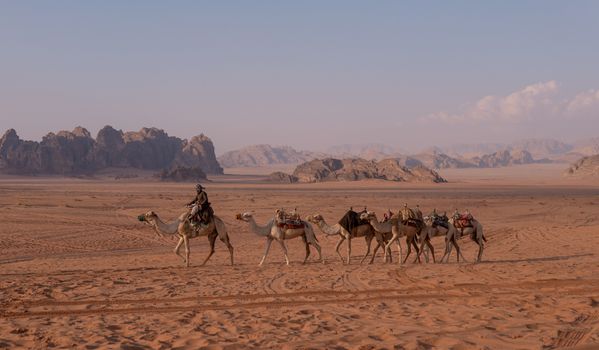
Jordan’s Wadi Rum is famous, and for good reason. Its Martian landscapes are breathtaking. But again, the main tourist areas can get crowded, especially at sunset. My quest for a truly hidden experience led me to seek out the desert's deeper, less-frequented canyons and plateaus.
Instead of booking a standard tour from Wadi Rum village, I connected with a Bedouin guide named Hamad, recommended by a friend who had lived in Jordan for years. Hamad specialized in multi-day treks that ventured far beyond the usual jeep routes. He promised "stars you’ve never seen" and "silence that hums." He delivered.
Our journey with Hamad involved a mix of jeep travel and hiking, taking us into narrow canyons with ancient Nabataean inscriptions that few tourists ever see. We scrambled up rock formations, discovering natural arches and hidden springs. One night, instead of a camp, we simply unrolled our sleeping bags on a high, flat plateau, protected by a natural rock overhang. Hamad built a small, smokeless fire and cooked a simple, delicious meal of chicken and vegetables buried in the sand – a traditional "zarb" cooked Bedouin style.
That night was, without exaggeration, one of the most magical of my life. The air was crisp, the silence absolute. And the stars? They were an overwhelming, glittering tapestry, stretching from horizon to horizon. Hamad, who knew the constellations like old friends, pointed out planets and galaxies, sharing ancient Bedouin star lore. We talked for hours, not about tourist sites, but about life, resilience, and the desert's enduring spirit. I didn't see another soul for three days.
Practical Details for Wadi Rum's Hidden Gems:
* Location: Wadi Rum Protected Area, Jordan. Focus on areas deeper than the main tourist circuit.
* How to Get There: Arrange a private multi-day tour with a trusted, independent Bedouin guide from Wadi Rum village. Ask for guides who offer trekking and camping in less-visited areas.
* Cost: A multi-day trek (2-3 nights) with a private guide, food, and basic camping can range from JOD 100-200 (approx. $140-280 USD) per person per day, depending on the itinerary and negotiation.
* What Made it Unique: The deep cultural connection with a knowledgeable Bedouin guide, the profound solitude, and the absolute lack of light pollution for unparalleled stargazing.
* Instagram Moment: The Milky Way captured over dramatic rock formations; ancient petroglyphs in a secluded canyon; the simple beauty of a meal cooked over an open fire under the desert sky.
Beyond Merzouga: Finding Solitude in Morocco's Lesser-Known Erg Chigaga
Morocco's Sahara Desert is iconic, with the dunes of Erg Chebbi near Merzouga being the most famous. But its popularity means it can feel more like an amusement park than an authentic wilderness experience. For true solitude, I set my sights on Erg Chigaga, the country’s largest and wildest sand sea. It’s harder to reach, which immediately weeds out the casual tourist.
My journey began in M'Hamid El Ghizlane, a small town often called "the gateway to the Sahara." From there, it was a grueling but spectacular six-hour 4x4 drive across rocky plains, dry riverbeds, and finally, into the undulating waves of sand that mark the beginning of Erg Chigaga. This wasn't a quick hop; it was a committed expedition.
I traveled with a small, locally-owned company recommended by a fellow blogger who had lived in Morocco for years. Our guide, Hassan, a Berber from a nomadic family, was a master storyteller and an expert navigator. Unlike the permanent, often luxurious camps near Merzouga, our camp in Erg Chigaga was a simple, mobile setup – tents that could be packed up and moved, leaving no trace.
The dunes of Erg Chigaga are immense, taller and more expansive than Erg Chebbi, and crucially, far fewer people visit. We spent our days trekking through the sand, learning about desert flora and fauna, and even visiting a nomadic family who shared mint tea with us in their tent. The nights were spent around a crackling fire, listening to Hassan play traditional Berber music on his drum, under a sky that felt impossibly vast and close.
The feeling of standing atop a towering dune at sunset, seeing nothing but an endless sea of sand stretching to the horizon, with not a single human sound or sign of civilization, is indescribable. It's humbling, liberating, and deeply peaceful. It’s the kind of silence that truly allows you to hear yourself think.
Practical Details for Erg Chigaga:
* Location: Erg Chigaga, Moroccan Sahara. Access typically from M'Hamid El Ghizlane.
* How to Get There: Requires a reputable 4x4 tour operator, usually a minimum of 2 nights/3 days from M'Hamid due to the travel time. Some tours start from Ouarzazate or Marrakech, but these are longer and more expensive.
* Cost: A 3-day/2-night private tour from M'Hamid can range from €250-500 (approx. $270-540 USD) per person, depending on inclusions and group size. It's an investment, but for the solitude, it's worth it.
* What Made it Unique: The sheer scale and wildness of the dunes, the challenging but rewarding journey to get there, and the genuine nomadic cultural encounters. Far fewer tourists than Erg Chebbi.
* Instagram Moment: Standing atop a giant dune with an endless, untouched sand sea stretching behind you; the vibrant colors of a Berber rug against the golden sand; the intricate patterns of wind-blown sand.
Practicalities for Your Secret Desert Escape
Embarking on these less-traveled desert expeditions requires a bit more preparation than a typical resort vacation. Here's what you need to know:
- Pack Smart & Light:
- Layers: Desert temperatures fluctuate wildly. Think light, breathable long sleeves for sun protection during the day and warm fleece/jacket for chilly nights.
- Footwear: Comfortable, closed-toe shoes for walking (sand can get hot!), and flip-flops for camp.
- Sun Protection: Wide-brimmed hat, sunglasses, high-SPF sunscreen, and a shemagh/kefiyeh (traditional headscarf) for sun and sand protection.
- Hydration: Reusable water bottle. Your guide will provide water, but always have your own. Dehydration is a real risk.
- Essentials: Headlamp/flashlight, power bank for charging devices (expect limited electricity), basic first-aid kit (band-aids, antiseptic wipes, pain relievers, rehydration salts), hand sanitizer.
- Camera Gear: Bring extra batteries and protection from sand!
- Safety & Respect:
- Trust Your Guide: These local guides are experts. Listen to their advice, especially regarding safety, local customs, and navigating the terrain.
- Inform Someone: Share your itinerary and guide’s contact information with a trusted friend or family member before you go.
- Leave No Trace: Pack out everything you pack in. Respect the delicate desert ecosystem and local cultural sites.
- Cultural Sensitivity: Dress modestly, especially when interacting with local communities. Ask permission before taking photos of people. Be open and respectful.
- Budgeting for Authenticity:
- True authentic experiences, especially those off the beaten path, often cost more than mass-market tours. You're paying for exclusivity, the guide's deep local knowledge, sustainable practices, and often, the logistics of reaching remote areas. View it as an investment in an unparalleled experience.
- Always clarify what's included (food, water, transport, activities) before booking.
- Embrace the Digital Detox:
- Many of these secret spots will have little to no phone signal or Wi-Fi. This is not a bug, it’s a feature! Embrace the disconnection. Let go of the need to constantly check your phone and immerse yourself fully in the present moment. You'll be surprised how liberating it feels.
Your Desert Adventure Awaits!
The desert holds an ancient magic, a profound wisdom that modern life often obscures. By venturing beyond the well-trodden paths, you’re not just taking a trip; you’re embarking on a personal quest, a journey to reconnect with something primal within yourself. The silence will soothe your overstimulated mind, the vastness will expand your perspective, and the raw beauty will leave an indelible mark on your soul.
Locals guard these secrets because they cherish the authenticity, the quiet, the true spirit of their land. But by seeking out these experiences with respect, curiosity, and an open heart, you become a custodian of that secret, a traveler who understands the true value of genuine connection over fleeting spectacle.
Are you ready to trade the city's relentless rhythm for the desert's timeless song? Are you prepared to discover the landscapes and stories that locals truly don't want mass tourism to spoil? I promise, these expeditions aren’t just Instagram-worthy; they’re life-worthy. Start planning your escape today, and prepare to be transformed.
What hidden gems have you discovered on your travels? Share your own secret spots or dream desert destinations in the comments below! Let’s inspire each other to explore beyond the obvious.
---