I remember it like yesterday: standing on a dusty street in Chiang Mai, Thailand, utterly mesmerized by the vibrant night market. The scent of street food hung heavy in the air, lanterns glowed, and the buzz of foreign languages filled my ears. It was everything I had dreamed of, yet a tiny voice in the back of my head whispered, "How will you ever afford to do this again?" My bank account, after a month of budget backpacking, was looking rather sad. My dream of seeing Machu Picchu, diving into the Great Barrier Reef, or sipping espresso in a Roman piazza felt impossibly far away.
Fast forward five years, and I’m writing this from a cozy airport lounge in Frankfurt, enjoying a complimentary cappuccino before boarding my business class flight to Tokyo – a flight I paid for almost entirely with points. That tiny voice? It’s long gone, replaced by the exhilarating hum of adventure, all thanks to a few "credit card tricks" I stumbled upon.
These aren't shady schemes or get-rich-quick fixes. These are legitimate, strategic ways to leverage credit cards to make your travel dreams a reality, often for a fraction of the cost, or even free. They changed my life forever, opening up a world I once thought was reserved for the ultra-rich. And trust me, if I can do it, so can you.
Are you ready to stop dreaming and start doing? Let's dive into the hacks that transformed my travel game.
*
1. The Foundation: Choosing the Right Travel Card (No, It's Not Just Any Card!)
When I first started, I thought any credit card would do. Boy, was I wrong. The single most crucial step is selecting the right travel card that aligns with your spending habits and travel goals. This isn't about picking the card with the prettiest design; it's about finding a powerful financial tool.
My Wake-Up Call:
For years, I used a generic cash-back card, earning a measly 1-2% on everything. Then a friend, a seasoned travel hacker, showed me her statement. She’d earned enough points for a round-trip flight to Bali just from her regular spending! That’s when I realized I was leaving serious money (or rather, points) on the table.
What to Look For:
- Generous Sign-Up Bonuses: This is your golden ticket, which we’ll cover next.
- High Earning Rates on Travel & Dining: Many cards offer 2x, 3x, or even 5x points on categories like flights, hotels, restaurants, or groceries. Match these to your biggest spending areas.
- NO Foreign Transaction Fees: This is non-negotiable for international travelers. A 3% fee on every purchase abroad adds up quickly. On my first trip to Italy, I unknowingly racked up over $50 in foreign transaction fees on a $1500 spend. Never again!
- Annual Fees (and When They're Worth It): Don't shy away from cards with annual fees ($95-$550+). Often, the benefits (like travel credits, lounge access, or free nights) far outweigh the cost, effectively making the fee "free" or even profitable.
- Flexible Redemption Options: Cards that allow you to transfer points to various airline and hotel partners often offer the best value.
My Personal Choice:
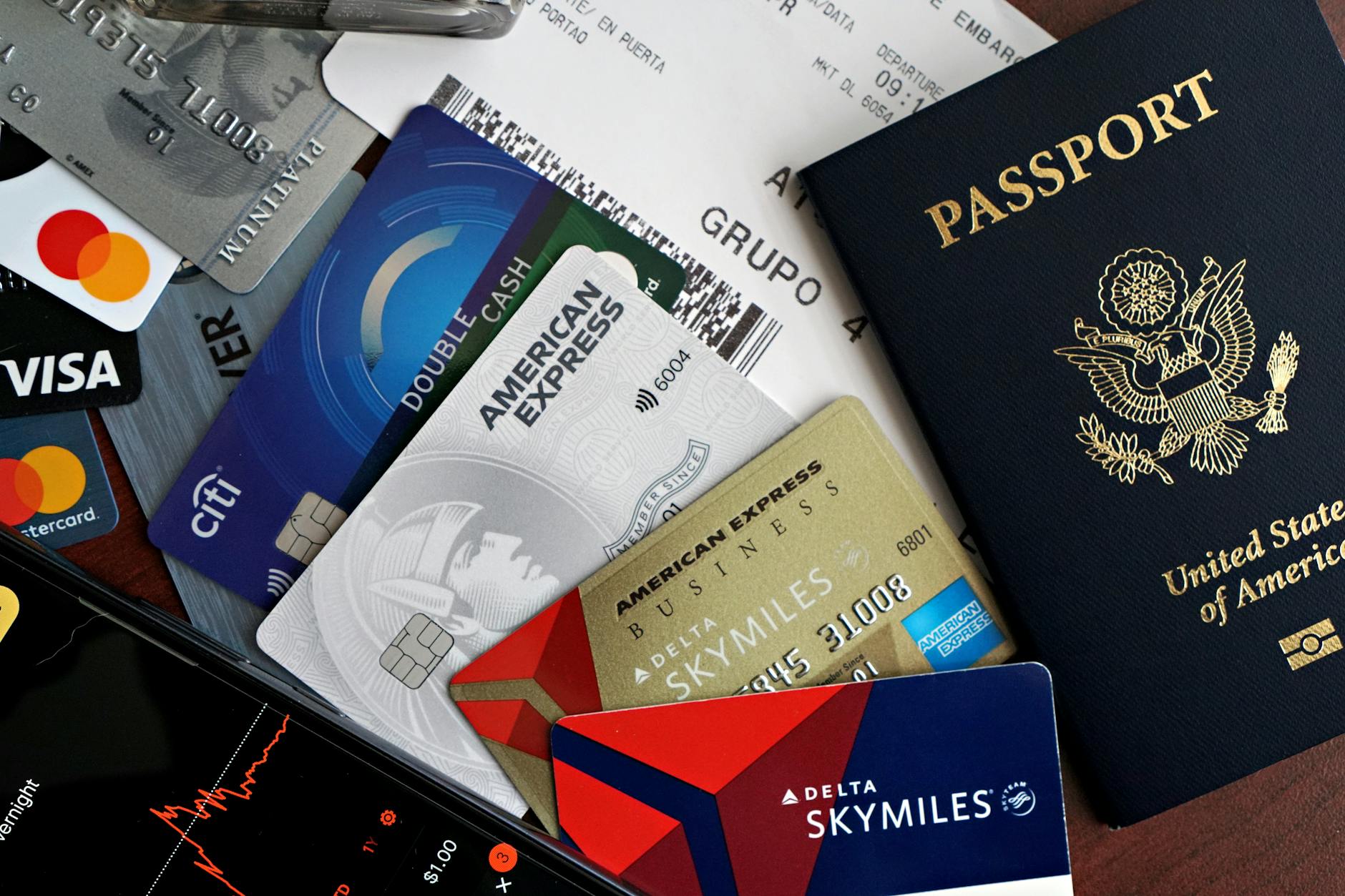
I started with a general travel rewards card (like a Chase Sapphire Preferred equivalent) because its points were flexible. This allowed me to experiment with different airlines and hotels before committing to a co-branded card. Later, I added an airline-specific card (e.g., Delta SkyMiles Amex) when I realized I frequently flew with that carrier.
Actionable Tip:
Before applying, make a list of your top 3 travel goals (e.g., "free flight to Europe," "hotel stay in Mexico," "lounge access") and your average monthly spending categories. Then, research cards that best fit these needs. Websites like The Points Guy or NerdWallet are fantastic resources for comparing options.
*
2. Mastering the Sign-Up Bonus: Your Golden Ticket to Free Travel
If there's one "trick" that changed my travel life more than any other, it's leveraging sign-up bonuses. These are massive point hauls (often 50,000 to 100,000+ points) offered when you open a new card and meet a specified minimum spending requirement within a few months (e.g., spend $3,000 in 3 months).
My First Big Win:
My first general travel card offered 60,000 points after spending $4,000 in three months. I was nervous about meeting the spend, but I simply shifted my regular bills (rent, utilities, groceries, eating out) onto the new card. Within two months, I hit the target. Those 60,000 points? They covered a round-trip flight from New York to Paris, which would have cost me around $800-$1000! I was sipping wine by the Seine, thinking, "This is real. This actually works!"
Strategies for Meeting Minimum Spend:
- Organic Spending: The safest and smartest way. Put all your regular, planned expenses on the new card: groceries, gas, dining, recurring subscriptions, car insurance, medical bills, phone bills.
- Upcoming Large Purchases: Planning a new laptop, furniture, or a home repair? Time your card application to coincide with these expenses.
- Pre-Pay Bills: If you have an annual insurance premium or can pre-pay your utilities for a few months, this can help.
- Authorized Users: Some cards count spending by authorized users towards the minimum.
- Caution with Manufactured Spending: There are advanced techniques like buying gift cards, but these can be risky and are not recommended for beginners. Stick to organic spending.
When to Apply:
Don't go wild and apply for 10 cards at once. This can negatively impact your credit score. A good rule of thumb is to apply for one new card every 3-6 months, or as needed, ensuring you can comfortably meet the minimum spend without overspending.
Actionable Tip:
Before applying for any card, write down exactly how you plan to meet the minimum spend. Never spend money you wouldn't normally spend just to hit a bonus. The goal is free travel, not debt!
*
3. Beyond the Bonus: Maximizing Everyday Spending & Earning Points
The sign-up bonus is the sprint, but maximizing everyday spending is the marathon. Once you've earned your initial bonus, the goal is to keep those points flowing in from your regular purchases.
My Everyday Strategy:
I became a "points optimizer." Before any purchase, big or small, I’d ask myself: "Which card gives me the most points for this specific category?"
- Category Bonuses:
- Dining: My favorite card gives me 3x points on all restaurant purchases. Whether I'm grabbing a quick coffee in Lisbon or enjoying a lavish dinner in Rome, that's my go-to card.
- Groceries: Another card offers 4x points at US supermarkets. This adds up incredibly fast, especially for a family.
- Travel: Many cards offer 2x-5x points on flights, hotels, and sometimes even rideshares or public transport. I use these when booking my next adventure.
- Online Shopping Portals: This is a fantastic, often overlooked hack! Websites like Rakuten (formerly Ebates) or airline/hotel shopping portals (e.g., United MileagePlus Shopping, Marriott Bonvoy Shop) give you extra points or cash back for shopping at your favorite online retailers. I once bought a new camera lens through a portal and earned an extra 5,000 points on top of the points from my credit card!
- Referral Bonuses: Many cards offer bonus points if you refer a friend who gets approved. If you love your card, spread the word and get rewarded!
Anecdote:
During a road trip through the Canadian Rockies, I ensured every gas station fill-up, every diner meal, and every souvenir purchase was on the card that maximized those categories. It felt like a small game, and by the end of the trip, I'd accumulated enough extra points for a free night at a charming boutique hotel in Banff. It's the little things that add up to big rewards!
Actionable Tip:
Create a simple spreadsheet or use an app to keep track of which card offers the best earning rate for different spending categories. Make it a habit to check before you swipe.
*
4. Unlocking Premium Perks: Lounge Access, Insurance & Elite Status
This is where "free travel" starts to feel like "luxury travel." Many premium travel credit cards come with a host of benefits that significantly enhance your travel experience and save you money.
Airport Lounge Access:
This is a game-changer. Imagine a delayed flight in a chaotic airport. Instead of fighting for a seat at a crowded gate, I'm in a quiet lounge, enjoying free food, drinks (yes, including alcohol!), Wi-Fi, and comfortable seating. My Priority Pass membership (a benefit from one of my premium cards) has saved my sanity (and wallet) countless times. That cappuccino in Frankfurt? Free. The delicious buffet breakfast during a 4-hour layover in Dubai? Free. It transforms travel days from stressful to serene.
Travel Insurance & Protections:
This is HUGE. Many cards offer:
- Trip Delay/Cancellation Insurance: When my flight from Rome to New York was delayed by 8 hours, my card's trip delay insurance covered a fantastic hotel stay and meals, saving me over $300.
- Baggage Delay/Loss Insurance: If your luggage goes missing, your card can often reimburse you for essential purchases.
- Rental Car Insurance (Primary or Secondary): This can save you a bundle on expensive rental car agency insurance. I always decline the rental company's CDW because my credit card provides primary coverage.
- Purchase Protection: Covers new purchases against damage or theft for a period.
Hotel Elite Status:
Some cards offer automatic mid-tier elite status with hotel chains (e.g., Marriott Bonvoy Gold, Hilton Honors Gold). This can lead to perks like:
- Free Room Upgrades: I've been upgraded to stunning suites in Bali and spacious rooms with ocean views in Mexico, all for free.
- Late Checkout: Crucial for evening flights, allowing you to enjoy your last day without lugging bags around.
- Free Breakfast: A daily saving that adds up, especially in expensive cities.
- Welcome Amenities: Often a small gift or bonus points.
Anecdote:
I was once stranded in Frankfurt due to a missed connection. The airline offered a meager food voucher. But thanks to my card's lounge access, I spent the 12-hour layover in comfort, enjoying hot meals, a shower, and a quiet space to work, all while my card's trip delay insurance kicked in to cover my unexpected hotel stay. It felt like a VIP experience out of what could have been a nightmare.
Actionable Tip:
Read your card's benefits guide! Seriously, most people don't. You might be sitting on a goldmine of perks you don't even know you have. Bookmark the benefits page for easy reference.
*
5. The Art of Redemption: Making Your Points Work Hardest
Earning points is only half the battle; redeeming them wisely is where you unlock maximum value. Not all points are created equal, and not all redemptions offer the same bang for your buck.
Transfer Partners – The Sweet Spot:
This is often where you get the most value. Many flexible points cards allow you to transfer your points to various airline loyalty programs (e.g., United MileagePlus, Air Canada Aeroplan, British Airways Executive Club) or hotel loyalty programs (e.g., Marriott Bonvoy, Hyatt, Hilton Honors).
My Best Redemption Ever:
I once transferred 60,000 points (earned from a sign-up bonus and everyday spending) to an airline partner and booked a one-way business class flight from Tokyo to San Francisco. The cash price for that ticket was over $3,000! I essentially got 5 cents per point value, far exceeding the typical 1-1.5 cents per point you might get from booking directly through a credit card portal. That flight, with its lie-flat seat, gourmet meals, and attentive service, was an experience I'll never forget – all thanks to points.
Booking Through the Card's Portal vs. Transferring:
- Card Portal: Convenient, often gives you a fixed value (e.g., 1 or 1.5 cents per point). Good for simple bookings or if you don't have enough points for a transfer partner redemption.
- Transfer Partners: Requires more research but can yield significantly higher value, especially for international business/first class flights or luxury hotel stays. Look for "sweet spots" – specific routes or hotel categories that require fewer points than their cash equivalent.
Avoiding Bad Redemptions:
Don't redeem 10,000 points for a $50 gift card. That's a terrible value (0.5 cents per point). Always compare the cash price of what you're trying to redeem for against the points required. Aim for at least 1.5-2 cents per point, and ideally much higher for premium travel.
Anecdote:
I was planning a last-minute weekend getaway to Seattle. My credit card portal offered a flight for 25,000 points. I checked an airline transfer partner, and they had the same flight for only 15,000 points. Always check your options! That extra 10,000 points meant I could save up for another domestic flight later.
Actionable Tip:
Before redeeming, spend 15-30 minutes researching different options. Check your card's travel portal, then look at direct airline and hotel partner websites. You might be surprised at the value you can unlock!
*
6. Essential Travel Safety & Security: Protecting Your Plastic Abroad
While credit cards open up amazing travel opportunities, it's crucial to use them responsibly and securely, especially when you're far from home.
- Always Use No Foreign Transaction Fee Cards: I cannot stress this enough. That 3% fee on every purchase adds up. If you spend $5,000 on a two-week trip to Europe, that's $150 in fees you've wasted! My current travel cards have saved me hundreds, if not thousands, in these fees over the years.
- Notify Your Bank of Travel Plans: A quick call or online notification prevents your card from being flagged for suspicious activity and potentially frozen while you're trying to pay for dinner in Barcelona.
- Have a Backup Card (and Keep it Separate!): This saved me during a terrifying incident in Barcelona. My wallet was pickpocketed, and my primary credit card was gone. Thankfully, I had a backup card (and my debit card) stashed in a separate, secure location in my hotel room. I was able to immediately cancel the stolen card and continue my trip without financial panic. Never keep all your cards in one place!
- Use Credit Over Debit for Purchases: Credit cards offer far superior fraud protection. If your debit card is compromised, money is directly removed from your bank account, which can be a nightmare to recover. With a credit card, you're usually not liable for fraudulent charges, and your money stays safe in your bank account.
- ATM Withdrawals: While tempting to use your credit card for cash advances, these usually come with high fees and interest rates that accrue immediately. For cash, use your debit card (ideally one that reimburses ATM fees, like some challenger banks). Try to minimize cash withdrawals as much as possible, as credit card purchases are more secure.
Anecdote:
After the wallet incident in Barcelona, my credit card company was incredibly helpful. They immediately cancelled the card, opened a fraud investigation, and reassured me I wasn't liable for the few small charges made before I reported it. The peace of mind was priceless. I also had a copy of my passport and credit card numbers (stored securely on my phone and in a cloud service) which made cancelling much smoother.
Actionable Tip:
Before any international trip, call your card issuers, set travel notifications, and ensure you have at least two different cards (from different networks, e.g., Visa and Mastercard) in separate locations.
*
7. The Responsible Traveler's Guide: Don't Get Carried Away!
These credit card tricks are powerful tools, but like any tool, they must be used responsibly. My journey from a broke backpacker to a points-savvy traveler was built on smart financial habits, not reckless spending.
- Pay Your Balance in Full, Always: This is the golden rule. If you carry a balance, the interest charges will quickly negate any points or rewards you earn. These tricks are for smart spending, not more spending.
- Don't Open Too Many Cards Too Quickly: This can ding your credit score and make it hard to manage. Space out your applications.
- Monitor Your Credit Score: Keep an eye on your credit report. Responsible credit card use, paying on time, and keeping your utilization low will actually improve your score, which is beneficial for everything from mortgages to car loans.
- Understand Annual Fees: Always weigh the annual fee against the benefits you actually use. If a card's benefits no longer justify its fee, consider downgrading to a no-annual-fee version or canceling (but only after you've redeemed your points!).
My Philosophy:
I used to be terrified of credit cards, associating them with debt. But by learning to use them strategically and responsibly, I've built excellent credit, saved thousands on travel, and experienced things I never thought possible. They are a means to an end – the end being incredible, unforgettable travel experiences.
Actionable Tip:
Set up automatic payments to ensure you never miss a due date. Regularly review your statements for accuracy and to track your spending.
*
Your Journey Starts Now: Unlock a World of Adventure!
The world is waiting for you, and these credit card tricks are your passport to exploring it without breaking the bank. From sipping cocktails on a beach in Bali to marveling at the Northern Lights in Iceland, these strategies have transformed my travel life, allowing me to experience more, save more, and often travel in far greater comfort than I ever imagined.
It’s not about being rich; it’s about being smart. Start small, understand the basics, and watch as your travel dreams slowly but surely become your incredible realities.
What's your biggest travel dream? And which credit card trick are you most excited to try first? Share your thoughts and questions in the comments below! Let's inspire each other to travel smarter!