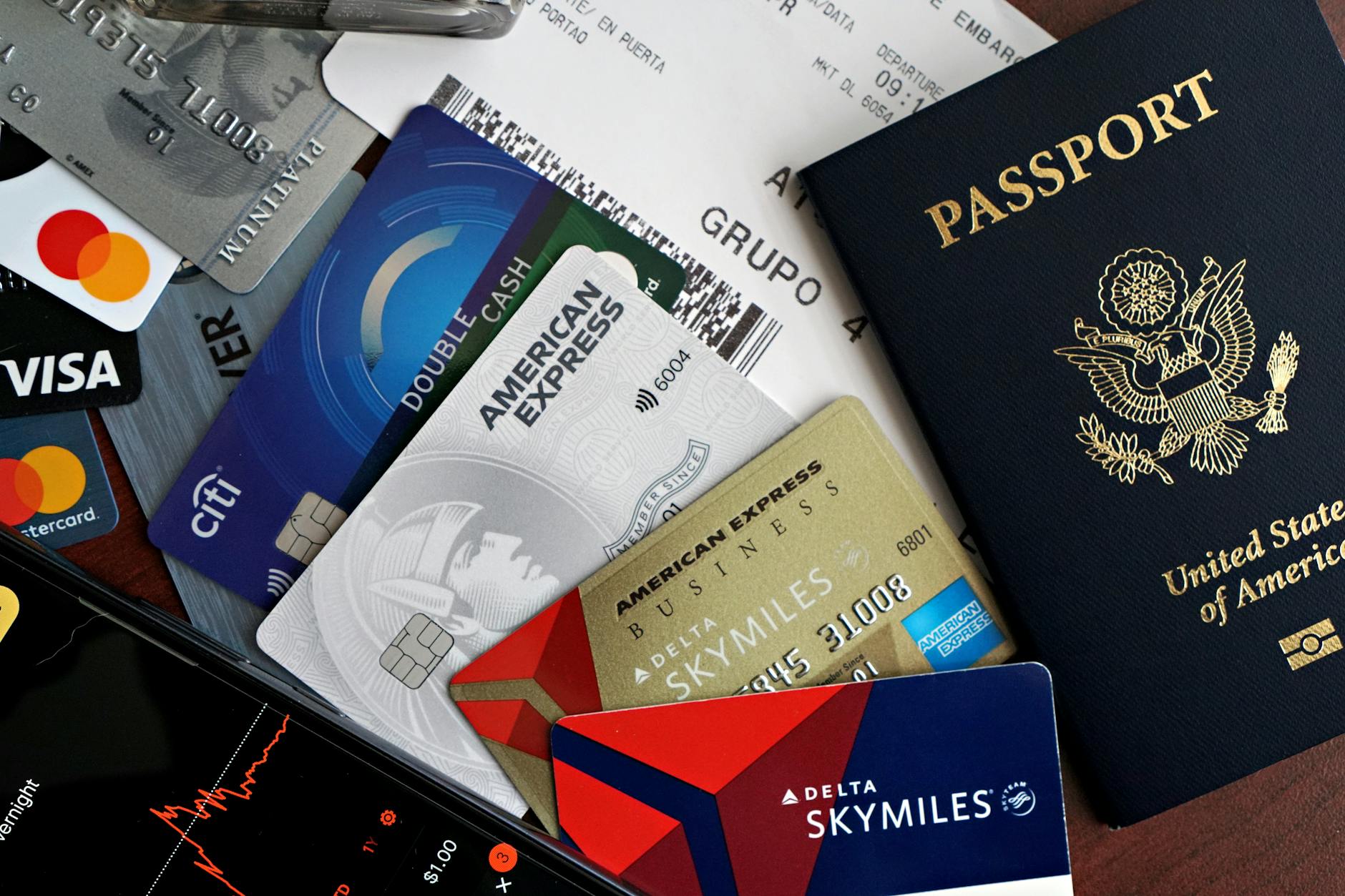
Credit Card Tricks Every Traveler Should Know That Will Blow Your Mind
Hey fellow wanderlusters! Sarah here, your go-to guide for all things travel on Tripsora. Today, we're diving deep into a topic that, honestly, changed my entire travel game: credit cards.
I know what you're thinking. "Credit cards? Isn't that just... debt?" And yes, used irresponsibly, they absolutely can be. But used smartly, strategically, and with a little insider knowledge, they can unlock a world of travel experiences you never thought possible. We're talking free flights, luxury hotel stays, exclusive lounge access, and even peace of mind when things go sideways on the road.
Let me tell you a quick story. My very first solo trip abroad was to Rome. I was young, naive, and had just one basic debit card in my wallet. Every time I pulled it out to pay for a gelato near the Trevi Fountain or a train ticket to Florence, I was unknowingly getting hit with foreign transaction fees. By the end of my two-week trip, I'd probably spent an extra $50-$70 just on these hidden charges – money that could have bought me another amazing pasta dinner or a souvenir to cherish. It was a painful lesson, but it sparked a curiosity: "There has to be a better way."
Fast forward a few years, and I've flown business class to Tokyo for less than the cost of an economy ticket, stayed in a five-star hotel in Paris for free, and had my trip saved by credit card insurance when my luggage went missing in Iceland. And it all started with learning these "tricks."
So, buckle up, because I'm about to blow your mind with the credit card hacks that will redefine how you travel.
1. The Foundation: No Foreign Transaction Fees & Mind-Blowing Sign-Up Bonuses
This is where it all begins, my friends. Before you even think about points or perks, you need to lay the groundwork.
No Foreign Transaction Fees: Your First Line of Defense
Remember my Rome story? Don't be like past Sarah! The absolute first thing every international traveler needs is a credit card that charges zero foreign transaction fees. These fees, typically 2-3% of every purchase made in a foreign currency, might seem small individually, but they add up fast.
- Actionable Advice: Before your next international trip, check your current cards. If they charge foreign transaction fees, it's time to get a new one. Many popular travel cards (like the Chase Sapphire Preferred, Capital One Venture X, or American Express Gold equivalents) offer this as a standard perk.
- Personal Anecdote: I once bought a beautiful handcrafted leather bag in Florence for €200. With a no-foreign-transaction-fee card, I paid exactly what the exchange rate dictated. Had I used my old debit card, I would have shelled out an extra $6-$8 for the privilege. That's a gelato and a coffee!
Sign-Up Bonuses: Your Express Lane to Free Travel
This is arguably the most powerful "trick" in the credit card game. Banks are constantly vying for new customers, and they're willing to pay you handsomely in points or miles to get your business.
A typical sign-up bonus might be something like "Earn 60,000 points after spending $4,000 in the first three months." That might sound like a lot, but think about your regular expenses: groceries, utilities, rent (if you can pay with a card without a fee), dining out, gas, even big purchases you might already be planning.
- What 60,000 points can get you:
- A round-trip economy flight within the US (often more than one!).
- A one-way international economy flight to Europe or Asia.
- 2-3 nights at a mid-tier hotel (like a Marriott or Hyatt Regency).
- Sometimes, even a one-way business class flight on a partner airline during a "sweet spot" redemption.
- Personal Anecdote: My husband and I once planned a trip to Hawaii. We each applied for a travel card with a substantial sign-up bonus (around 50,000-75,000 points each). By strategically putting all our household expenses on these cards for a few months, we easily met the spending requirements. The result? Two round-trip flights from the East Coast to Maui, saving us well over $1,500! We even had points left over for a couple of nights at the Hyatt Centric Waikiki. It felt like magic.
2. The Earning Game: Maximizing Your Points & Miles Beyond the Bonus
Once you've secured that initial bonus, the game isn't over. Smart travelers know how to keep the points flowing.
Category Bonuses: Spend Smarter, Not Harder
Many travel credit cards offer bonus points for spending in specific categories. This is where you align your spending habits with your card's benefits.
- Common Bonus Categories:
- Travel: 2x-5x points on flights, hotels, car rentals, tolls, and even ride-sharing.
- Dining: 2x-4x points at restaurants, cafes, and bars.
- Groceries: 2x-4x points at supermarkets.
- Online Shopping: Some cards offer rotating categories or specific bonuses with certain retailers.
- Actionable Advice: Look at your monthly budget. Where do you spend the most? Get a card that rewards those categories. If you eat out a lot, make sure your primary card gives you bonus points for dining. If you're a grocery guru, find a card that maximizes supermarket spending.
- Personal Anecdote: My go-to card for dining gives me 3x points on all restaurant purchases. Considering my love for trying new eateries, that adds up! Last year, just from my dining spend, I earned enough points for a free weekend stay at a boutique hotel in Asheville, North Carolina. We explored breweries, hiked the Blue Ridge Mountains, and it felt completely guilt-free because the stay was "on the house."
Shopping Portals: The Secret Multiplier
This is a trick many people overlook! Before you buy anything online, check if your credit card issuer (or an airline/hotel loyalty program) has a shopping portal. These portals offer extra points or miles for purchases made through their links.
- How it works: Let's say you need to buy a new camera from Best Buy. Instead of going directly to Best Buy's website, you log into your credit card's shopping portal, click on the Best Buy link there, and complete your purchase. You'll earn your regular points from the credit card plus an additional 2x, 5x, or even 10x points per dollar from the portal.
- Actionable Advice: Always check a shopping portal before making a significant online purchase. A quick Google search for "[Your Card Issuer] shopping portal" or "[Airline Name] shopping portal" will usually lead you there.
- Personal Anecdote: I needed a new laptop for work, a $1,500 purchase. I checked my card's shopping portal and found an offer for 5x points at the electronics retailer I was planning to use. That single purchase netted me an extra 7,500 points – enough for another domestic flight segment or a free night at a budget-friendly hotel! It took an extra 30 seconds but saved me hundreds.
3. The Redemption Revolution: Flights & Hotels for (Almost) Free
This is where the magic truly happens – turning those hard-earned points into tangible travel experiences.
Transfer Partners: The Key to Outsized Value
Many premium travel credit cards earn "transferable points" (like Chase Ultimate Rewards, Amex Membership Rewards, or Capital One Miles). This means you can transfer your points to various airline and hotel loyalty programs, often at a 1:1 ratio. This is where you find the "sweet spots" and unlock incredible value.
- Why Transfer? Sometimes, booking directly through your credit card's travel portal offers decent value, but transferring to a partner can yield much higher value, especially for business or first-class flights, or luxury hotel stays.
- Actionable Advice: Research "sweet spots" for your points. For example, transferring Chase Ultimate Rewards to Hyatt often yields fantastic value for hotel stays. Transferring Amex Membership Rewards to ANA (All Nippon Airways) can get you business class flights to Asia for significantly fewer points than other programs.
- Personal Anecdote: My dream trip was always to go to the Maldives. A luxury overwater villa can cost $1,000-$2,000 per night! But by transferring a combination of Chase Ultimate Rewards and American Express Membership Rewards to a hotel partner (like Marriott Bonvoy, during a promotion), I was able to book five nights at a stunning resort for "free" (just paying taxes/resort fees). The cash value of that stay would have been over $6,000, but it cost me around 250,000 points. It felt like I was cheating the system, sipping cocktails in paradise without the crushing bill!
Award Charts & Dynamic Pricing: Navigating the System
Some loyalty programs still use "award charts" (fixed prices for flights/hotels), while others use "dynamic pricing" (prices fluctuate with demand, like cash prices). Understanding this helps you find the best deals.
- Tips:
- Be flexible with your travel dates. Mid-week or off-season travel usually requires fewer points.
- Look for "saver awards" or "standard awards" which are the lowest point costs.
- Check multiple partners. If you want to fly to London, check award availability with British Airways, Virgin Atlantic, United, Delta, etc., using your transferable points.
- Specific Example: A few years ago, I found a round-trip business class flight from the US to Tokyo on ANA for only 70,000 Amex Membership Rewards points by transferring them to ANA's Mileage Club. The cash price for that ticket was easily over $4,000! That's a redemption value of over 5 cents per point, far exceeding the typical 1-2 cents per point you might get booking through a portal.
4. Beyond Points: Hidden Perks & Protections That Save Your Trip
This is where credit cards become your silent travel guardian angel. The benefits extend far beyond just earning points.
Travel Insurance: Your Safety Net
Many premium travel cards offer robust travel insurance benefits that can save you thousands.
- Trip Delay/Cancellation Insurance: If your flight is delayed by a certain number of hours (e.g., 6+ hours) or canceled, your card might reimburse you for unexpected expenses like meals, accommodation, or even non-refundable trip costs.
- Baggage Delay/Loss Insurance: If your luggage is delayed or lost, your card can cover essential purchases (toiletries, clothing) or even reimburse you for the value of lost items.
- Rental Car Insurance (Primary vs. Secondary): Some cards offer primary rental car insurance, meaning you don't have to claim through your personal car insurance first (which can raise your rates). This is a HUGE money saver, as rental car companies charge exorbitant daily rates for their insurance.
- Actionable Advice: Understand your card's benefits. Read the "Guide to Benefits" document that comes with your card. It's boring, but it's gold! Always pay for your travel (flights, hotels, rental cars) with the card that offers the best travel protections.
- Personal Anecdote: I once flew to Iceland for a hiking trip, and my checked bag didn't make it. It was delayed for 48 hours! My credit card's baggage delay insurance kicked in, covering up to $500 for essential purchases. I was able to buy new hiking boots, warm layers, and toiletries without dipping into my vacation budget. When the bag finally arrived, I was already enjoying the Blue Lagoon, completely stress-free.
Lounge Access: A Sanctuary in the Chaos
Premium travel cards often include complimentary access to airport lounges worldwide, typically through programs like Priority Pass.
- Benefits: Free food, drinks (including alcohol), Wi-Fi, comfortable seating, showers, and a quiet escape from the bustling terminal.
- Actionable Advice: If you travel frequently, especially with layovers, lounge access is a game-changer. Calculate how much you spend on airport food/drinks; lounge access can easily offset an annual fee.
- Personal Anecdote: During a particularly brutal 8-hour layover in Dubai on my way to Vietnam, my Priority Pass membership (courtesy of my travel card) saved my sanity. I enjoyed a hot meal, caught up on emails in a quiet corner, and even took a refreshing shower. It transformed a miserable wait into a mini-vacation within my journey.
Hotel Elite Status & Perks:
Some co-branded hotel cards or premium travel cards offer automatic elite status with hotel chains (e.g., Marriott Bonvoy Gold, Hilton Honors Gold).
- Perks: Room upgrades, complimentary breakfast, late checkout, bonus points on stays, and sometimes even lounge access at the hotel.
- Specific Example: My Hilton Honors American Express Aspire card grants me Diamond status. This often means free breakfast for two, executive lounge access (with free evening appetizers and drinks), and room upgrades (I've been upgraded to suites multiple times!) at Hilton properties worldwide. Staying at the Hilton in Barcelona, we saved over €50 a day on breakfast alone!
5. The Advanced Playbook: Strategic Card Churning (Responsibly!) & Companion Passes
For the truly dedicated, there are even more advanced strategies.
Strategic Card Churning: A Careful Dance
"Churning" refers to the practice of opening new credit cards specifically to earn their sign-up bonuses, then closing them (or downgrading them) after a year to avoid annual fees, and repeating the process.
- Disclaimer: This is NOT for everyone. It requires excellent credit, meticulous organization, and a deep understanding of credit scores and bank rules (like Chase's 5/24 rule). If you're new to credit cards, focus on the basics first.
- Actionable Advice: If you decide to explore this, do extensive research. Understand how it impacts your credit score (it can temporarily lower it due to new inquiries, but responsible management usually sees it rebound). Always pay your balances in full and on time.
- Personal Anecdote: I've dabbled in responsible churning, primarily focusing on cards with no annual fees in the first year or cards that offer benefits that far outweigh the fee. This has allowed me to accumulate a significant stash of points for specific travel goals, like a multi-city tour through Southeast Asia where flights and hotels were largely covered by points.
The Legendary Companion Pass:
Some cards offer incredibly powerful benefits like a "Companion Pass" (most famously from Southwest Airlines).
- How it works: Earn a certain number of qualifying points in a calendar year, and a designated companion can fly with you for free (you just pay taxes/fees) on every flight you take for up to two years!
- Specific Example: If you earn the Southwest Companion Pass, you could fly yourself and a friend/partner from Los Angeles to Cancun for essentially the price of one ticket's taxes. Imagine the possibilities for weekend getaways or family visits! This is a legendary perk for a reason.
6. Avoiding the Pitfalls: What NOT to Do
With great power comes great responsibility. Credit cards are tools, and like any tool, they can be misused.
- Never Carry a Balance: This is the golden rule. The interest rates on travel credit cards are high. Any rewards you earn will be negated, and then some, if you're paying interest. Only spend what you can afford to pay off in full every single month.
- Don't Pay Annual Fees You Don't Get Value From: Many premium travel cards have annual fees ($95 to $695+). If you're not utilizing the benefits (points, lounge access, travel credits, insurance), then that fee is a waste. Always assess if the value you receive outweighs the cost.
- Don't Chase Every Bonus: Applying for too many cards too quickly can hurt your credit score and make it harder to get approved for future cards. Be strategic and focused.
- Beware of "Too Good to Be True" Offers: Always read the fine print. Some offers might have hidden catches or extremely high spending requirements.
Conclusion: Your Passport to Smarter, More Luxurious Travel
Learning these credit card tricks isn't just about saving money; it's about elevating your entire travel experience. It's about turning those dream destinations from "someday" into "next year." It's about flying in comfort, staying in style, and having peace of mind when you're thousands of miles from home.
I went from a naive traveler losing money on foreign transaction fees to someone who regularly enjoys business class flights and luxury hotel stays for a fraction of the cost. You can too!
So, what's your first step?
- Check Your Current Cards: Do you have any with no foreign transaction fees?
- Assess Your Spending: Which categories do you spend the most in?
- Research: Look into a reputable travel credit card that aligns with your spending habits and travel goals. Don't be afraid to read reviews from trusted sources.
- Apply Responsibly: Start with one card, meet the spending requirement for the bonus, and pay it off in full!
Imagine yourself sipping champagne at 30,000 feet, knowing your flight was practically free. Or waking up in a luxurious hotel suite overlooking a stunning cityscape, all thanks to smart credit card use. This isn't just a fantasy; it's a reality for millions of savvy travelers. And now, it can be yours.
What's the most mind-blowing credit card trick you've learned? Share your stories and tips in the comments below! And don't forget to share this post with your fellow wanderlusters – let's help everyone travel smarter!
---