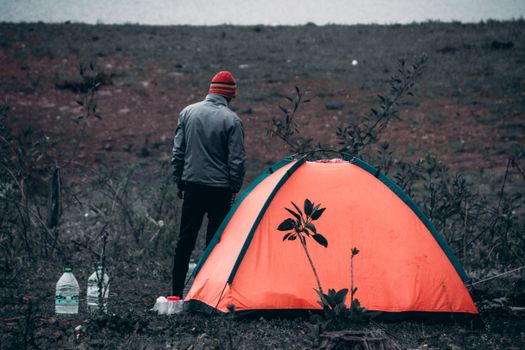
Alien Landscapes: Camping Spots That Changed My Life Forever
There are trips, and then there are journeys. Moments when the veil between the mundane and the magnificent lifts, and you find yourself standing on terrain so utterly alien, so profoundly beautiful, that it feels less like a vacation and more like a pilgrimage to another dimension. I’m not talking about just pretty campsites; I’m talking about places that silence your inner chatter, expand your perception, and fundamentally shift your understanding of what’s possible on this planet – and within yourself.
I’ve chased sunsets over oceans, hiked through ancient forests, and woken up to mountain sunrises more times than I can count. But nothing, absolutely nothing, prepared me for the sensation of pitching a tent in places that felt like a cosmic error, a glitch in the matrix that somehow transported me light-years away. These aren't just camping spots; they are portals. And each one changed a piece of me forever.
If you’re ready to trade the familiar for the fantastical, to embrace the raw beauty of the truly extraordinary, then pack your bags (and your sense of wonder). Because these are the camping spots that feel like another planet, and they’re waiting to change your life, too.
1. Valle de la Luna (Moon Valley), Atacama Desert, Chile: Martian Dreams Under the Clearest Skies
My first "alien" encounter was in the heart of the Atacama Desert, Chile – specifically, Valle de la Luna. I’d seen photos, read descriptions, but nothing, and I mean nothing, prepares you for the sheer, desolate grandeur of this place. Imagine a landscape sculpted by wind and water over millennia, creating towering sand dunes, jagged rock formations, and vast salt flats that shimmer under an unforgiving sun. The colors here are unreal: ochre, rust, deep reds, and purples that morph with every passing cloud, every shift of light. It’s Mars, without the space suit.
I remember setting up my tent near the "Amphitheater," a natural bowl of rock and sand, just as the sun began its descent. The silence was profound, broken only by the whisper of the desert wind. As the last sliver of sun dipped below the horizon, painting the sky in fiery hues, the stars began to emerge. And oh, the stars! The Atacama is renowned for having some of the clearest skies on Earth, and it’s no exaggeration. It felt like I could reach out and touch the Milky Way. I spent hours just lying on my back, mesmerized, feeling utterly insignificant yet profoundly connected to the cosmos. That night, I truly understood the vastness of the universe and how small my worries were in comparison. It was a humbling, almost spiritual experience.
Practical Tips for Your Martian Mission:
* Getting There: Fly into Calama (CJC), then take a shuttle or bus to San Pedro de Atacama. From San Pedro, you can rent a car, join a tour, or bike to Valle de la Luna (about 13 km).
* Camping: Wild camping is generally not permitted inside Valle de la Luna itself due to its protected status. However, there are designated campsites or more rustic spots just outside the main park boundaries, or you can find tour operators who offer overnight experiences with special permits. I opted for a guided "astronomy camping" tour that had special permissions. Expect basic facilities.
* Best Time to Visit: March to November offers cooler temperatures and clearer skies. Avoid January/February due to the "Altiplanic Winter" (occasional rain).
* What to Bring: Layers (desert nights are freezing!), plenty of water (minimum 4-5 liters/day), high SPF sunscreen, wide-brimmed hat, sunglasses, sturdy hiking boots, a good headlamp, and a camera with manual settings for astrophotography.
* Costs: Entry to Valle de la Luna is around 3,000 CLP (approx. $4 USD). Guided tours (highly recommended for stargazing/camping outside park limits) can range from $50-$150 USD depending on inclusions.
2. White Sands National Park, New Mexico, USA: A Gypsum Ocean Under Earth's Sun
Imagine an endless ocean of pure white sand, stretching as far as the eye can see, shimmering under the desert sun. This isn’t snow; it’s gypsum, a rare geological phenomenon that creates the largest gypsum dune field in the world: White Sands National Park. My visit here felt like landing on a giant, pristine snowball in the middle of a scorching desert. The landscape is constantly shifting, sculpted by the wind into magnificent, undulating waves.
I arrived late in the afternoon, secured one of the ten primitive backcountry campsites, and hiked deep into the dunes. The silence here is different from the Atacama – it’s a soft, muffled quiet, as if the gypsum absorbs all sound. The light is incredible; the white sand reflects the sky, creating a surreal glow. As the sun began to set, the dunes transformed from blinding white to soft pastels of pink, orange, and purple, casting long, dramatic shadows. I remember sliding down a dune on a sled (a must-do here!) and laughing like a child, the fine, cool sand spraying around me. Later, huddled in my tent, the vast expanse outside felt both isolating and incredibly freeing. Waking up to the pure, untouched white expanse, with only my footprints breaking the pristine surface, was an unforgettable moment of pure, unadulterated awe.
Practical Tips for Your Gypsum Getaway:
* Getting There: Located in south-central New Mexico, about an hour northeast of Las Cruces. Drive-in access.
* Camping: There are 10 primitive backcountry campsites accessible via a 1-mile hike into the dunes. Permits are first-come, first-served and must be obtained at the visitor center (arrive early!). No water or facilities at sites.
* Best Time to Visit: Spring and Fall offer milder temperatures. Summer can be scorching (100°F+), and winter nights can be below freezing. Check missile range closure schedules before you go (yes, it’s near a missile range!).
* What to Bring: Sleds (can be bought at the visitor center), plenty of water (at least 1 gallon/person/day), wide-brimmed hat, sunglasses (essential due to glare), sturdy shoes (sand gets hot!), a tent with good sand stakes, and layers.
* Costs: Park entrance fee is $25 per vehicle (valid for 7 days) or $15 per person if entering on foot/bike. Backcountry camping permit is an additional $3 per person.
3. Landmannalaugar, Icelandic Highlands: A Rainbow Planet of Geothermal Wonders
Iceland often feels like another planet in its entirety, but nowhere more so than Landmannalaugar in the Highlands. This isn't just a place; it's an explosion of color and geothermal activity that will make you question if you've accidentally stumbled into a geological painting. The rhyolite mountains here are striped with impossibly vibrant hues – reds, yellows, greens, blues, and grays – all formed by volcanic activity and mineral deposits. Steam rises from hot springs, black obsidian fields gleam, and vibrant green moss carpets ancient lava flows.
My journey to Landmannalaugar was an adventure in itself, navigating treacherous F-roads in a 4x4. Arriving at the campsite, nestled among these kaleidoscopic mountains, felt like discovering a secret world. The air was thick with the scent of sulfur, and the ground was warm in places. I remember soaking in the natural hot spring, surrounded by the otherworldly landscape, as a light drizzle turned to mist, making the whole scene even more ethereal. Hiking through the multi-colored trails, past bubbling mud pots and steaming vents, I felt a primal connection to the Earth's raw power. It was a reminder that our planet is a living, breathing entity, constantly creating and transforming. The sheer vibrancy and dynamic nature of Landmannalaugar reset my visual palette and my understanding of natural beauty.
Practical Tips for Your Geothermal Expedition:
* Getting There: Requires a 4x4 vehicle to navigate the F-roads (only open June-September). Alternatively, take a Highland Bus from Reykjavík or other towns.
* Camping: The Landmannalaugar campsite is a popular base for hikers, offering basic facilities, toilets, and showers. It can get busy. There’s also a hut for those not camping.
* Best Time to Visit: Only accessible in summer (late June to early September) when the F-roads are open.
* What to Bring: Waterproof and windproof layers (weather changes rapidly), sturdy hiking boots, swimsuit for hot springs, quick-dry towel, food (limited options for purchase), fuel for cooking, and a detailed map/GPS.
* Costs: Camping is approximately 2,500-3,000 ISK per person per night (approx. $20-25 USD). Hut accommodation is significantly more. Bus tickets are around 10,000-15,000 ISK ($75-115 USD) one-way.
4. Salar de Uyuni, Bolivia: A Cosmic Mirror on Earth
If you want to feel truly untethered from reality, then Salar de Uyuni, the world's largest salt flat, is your destination. Covering over 10,000 square kilometers, this vast expanse of pure white salt in Bolivia is an illusionist's dream. During the dry season, it’s a blindingly bright, hexagonal-patterned desert. But during the wet season (December to April), a thin layer of water transforms it into the most incredible natural mirror, reflecting the sky so perfectly that the horizon disappears. You literally feel like you’re walking on clouds, suspended between heaven and Earth.
My experience here was part of a multi-day 4x4 tour, which typically includes overnight stays in basic salt hotels or camping. Waking up on the salt flat, with the stars still twinkling overhead and the first hint of sunrise painting the mirrored surface, was an out-of-body experience. We camped near "Incahuasi Island" (Fish Island), a rocky outcrop covered in giant cacti that looks like a forgotten alien outpost. The sheer scale and optical illusions available for photography are mind-boggling. I remember spending hours trying to capture the perfect perspective photo, feeling like a giant stepping on tiny cars, or holding the sun in my hand. It’s a place that strips away all context, forcing you to reconsider your perspective and embrace the absurd. It was a playground for my imagination and a profound lesson in how perspective shapes reality.
Practical Tips for Your Mirror World Expedition:
* Getting There: Most people visit Salar de Uyuni as part of a multi-day 4x4 tour departing from Uyuni, Bolivia, or San Pedro de Atacama, Chile.
* Camping/Accommodation: Many tours include stays in basic "salt hotels" (built from salt blocks) or provide camping gear for more remote spots. Don't expect luxury; think rustic and authentic.
* Best Time to Visit: Dry season (May-November) for hexagonal patterns and easier travel. Wet season (December-April) for the iconic mirror effect, though some areas may be inaccessible due to deeper water.
* What to Bring: Very warm layers (nights are freezing, especially in winter), high SPF sunscreen, sunglasses (critical due to glare), lip balm, hat, camera with a wide-angle lens, extra batteries (no charging in remote areas).
* Costs: 3-day/2-night tours typically range from $150-$250 USD, including transport, food, and basic accommodation/camping. Park entry fees (e.g., to Incahuasi Island) are usually extra (around 30 BOB / $4 USD).
5. Goblin Valley State Park, Utah, USA: A Whimsical Martian Playground
If the Atacama is Mars, then Goblin Valley State Park in Utah is its quirky, playful moon. Nestled in the heart of Utah's unique red rock country, this park is home to thousands of mushroom-shaped hoodoos, locally called "goblins," scattered across a vast, flat valley floor. These surreal rock formations, ranging from a few feet to several meters tall, create a landscape that feels less like Earth and more like a set from a whimsical alien movie.
My first sight of Goblin Valley was disorienting in the best way. It was late afternoon, and the low sun cast long, dancing shadows among the goblins, making them seem alive. I remember just wandering for hours, completely lost in the maze of these strange, bulbous figures, each one unique. There are no marked trails in the valley itself; you’re encouraged to explore freely, which adds to the sense of discovery. I found a secluded spot among the goblins to pitch my tent, and as night fell, the silence was absolute. The stars here, far from any major light pollution, were brilliant. Waking up to the soft glow of dawn illuminating the thousands of stony sentinels felt like being welcomed into a secret, ancient gathering. It’s a place that ignites the imagination, reminding you that wonder can be found in the most unexpected, peculiar forms.
Practical Tips for Your Goblin Encounter:
* Getting There: Located in central Utah, about an hour southeast of Green River or an hour west of Moab. Drive-in access.
* Camping: Goblin Valley State Park has a small, well-maintained campground with 25 sites, including restrooms, showers, and picnic tables. Reservations are highly recommended, especially during peak season.
* Best Time to Visit: Spring and Fall for mild temperatures. Summer can be very hot, and winter can be cold.
* What to Bring: Plenty of water, sun protection (hat, sunscreen), sturdy hiking shoes, a camera to capture the unique formations, and a sense of childlike wonder.
* Costs: Park entrance fee is $20 per vehicle. Camping is $40 per night. Reservations can be made via Utah State Parks website.
Beyond the Scenery: The Transformative Power of Alien Landscapes
It’s not just the visual spectacle that makes these places life-changing. It’s the profound sense of perspective they offer. When you’re surrounded by landscapes that defy earthly norms, your problems, your anxieties, your everyday stresses begin to shrink. You’re forced to confront your own smallness in the face of such vast, ancient, and powerful forces.
These experiences foster:
* Humility: Realizing the immense scale of geological time and cosmic space.
* Resilience: Navigating challenging terrains and extreme conditions builds inner strength.
* Creativity: The sheer uniqueness sparks new ideas and ways of seeing.
* Gratitude: A deeper appreciation for the wonders of our own planet.
* Presence: The lack of distractions forces you to be fully in the moment.
Your Own Otherworldly Adventure: Practical Tips for the Aspiring Cosmic Camper
Ready to embark on your own "other planet" camping trip? Here are some essential tips to make it a reality:
- Research, Research, Research: These aren't your average campgrounds. Permits, accessibility, weather patterns, and local regulations are crucial. Some places require guided tours or 4x4 vehicles.
- Pack for Extremes: "Alien" often means extreme. Expect drastic temperature swings (hot days, freezing nights), intense sun, and unpredictable weather. Layers are your best friend.
- Water is Life: Always carry more water than you think you’ll need. Hydration is non-negotiable in arid or high-altitude environments.
- Leave No Trace, Seriously: These fragile environments are easily damaged. Pack out everything you pack in. Stick to designated areas, minimize your impact, and respect local cultures and wildlife.
- Navigation is Key: GPS, detailed maps, and a compass are essential, especially in unmarked or vast, disorienting landscapes. Cell service will likely be nonexistent.
- Embrace the Silence: Disconnect from your devices. These places are best experienced when you allow yourself to be fully present and absorb the profound quiet.
- Invest in Good Gear: A reliable tent that can withstand wind, a warm sleeping bag, and comfortable, sturdy hiking boots are non-negotiable.
- Physical and Mental Preparation: Some locations involve high altitude or strenuous hiking. Ensure you’re physically prepared. Mentally, be ready for isolation and the awe-inspiring (and sometimes overwhelming) scale of your surroundings.
Ready for Your Own Cosmic Journey?
These otherworldly camping spots aren't just places to visit; they are experiences that will resonate within you long after you’ve packed up your tent. They challenge your perceptions, push your boundaries, and offer a profound connection to the raw, untamed beauty of our incredible planet. They changed my life, showing me just how vast and magnificent our world truly is, and how much more there is to discover.
So, what are you waiting for? Pick a spot, pack your sense of adventure, and prepare to have your mind blown. The universe, in all its strange and wonderful forms, awaits right here on Earth. Have you experienced a camping spot that felt like another planet? Share your stories and photos with us in the comments below or tag #TripsoraAlienAdventures on social media! Let’s inspire more cosmic campers!