The Moment I Forgot I Was in America
I stepped off the small bush plane in Seward, Alaska, and for a split second, I was certain the pilot had taken a massive wrong turn and landed in Queenstown. The air didn't just smell cold; it smelled ancient—a sharp, bracing mixture of crushed granite, saltwater spray, and the distinct, ozonated scent of calving ice. To my left, the Resurrection Bay fjords rose vertically out of the ink-blue water, draped in a green so aggressive it felt cinematic.
As a travel journalist who has spent months traversing both the North and South Islands of Aotearoa, I’ve always been a New Zealand purist. But standing there, watching a bald eagle swoop over a landscape that looked more like Milford Sound than Milford Sound itself, I realized we’ve been sleeping on our own backyard.
Right now, with international travel costs soaring, these seven American landscapes aren't just "alternatives"—they are world-class rivals.
1. Kenai Fjords, Alaska: The Milford Sound Twin
If you’ve ever scrolled through Instagram and drooled over photos of New Zealand’s Milford Sound, you’re looking at a "fjord"—a glaciated valley flooded by the sea. Alaska’s Kenai Fjords National Park is its long-lost twin.
The scale here is staggering. While Milford Sound is iconic, the Aialik Glacier in Kenai offers a visceral experience that feels even more wild. When the ice "calves" (breaks off into the ocean), the sound is like a localized earthquake.
- The Insider Edge: Don't just take the big catamaran tours. Book a dry-suit kayaking excursion into Aialik Bay. You’ll paddle through "bergy bits" (small ice chunks) that tinkle like crystal chandeliers against your hull.
- Pro-Tip: Visit in late August. The silver salmon are running, which means the black bears are active along the shoreline, and the summer fog begins to lift, revealing the jagged "nunataks" (mountain peaks poking through ice fields).
2. The Palouse, Washington: The Real-Life Hobbiton
Everyone heads to Matamata, NZ, to see the rolling green hills of the Shire. But if you drive into the Palouse region of Southeastern Washington and Northern Idaho during June, you’ll find a landscape of undulating silt dunes that look like frozen green waves.
The Palouse is a photographer’s fever dream. The way the light hits the wheat and lentil fields at "Golden Hour" creates shadows that look like velvet folds. It is, quite literally, the most beautiful pastoral landscape in North America.
- The Insider Edge: Head to the top of Steptoe Butte at sunrise. It’s an 800-foot quartzite island popping out of the loess soil. From here, you have a 360-degree view of the "waves."
- Pro-Tip: Stay in the town of Colfax and grab a coffee at a local diner. Ask the farmers which fields are currently in "purple bloom"—the lentil crops turn a stunning shade that rivals New Zealand’s lupin fields.
3. Glacier National Park, Montana: The Southern Alps of the North
New Zealand’s Southern Alps are famous for their sharp, "young" peaks and turquoise glacial lakes. Glacier National Park (GNP) in Montana is the only place in the lower 48 that matches that specific aesthetic intensity.
The Going-to-the-Sun Road is arguably the most dramatic drive in the world, rivaling the road to Mount Cook. You’re flanked by "horns" and "arêtes"—geological terms for the sharp ridges left behind by receding glaciers.
- The Insider Edge: Skip the crowded Logan Pass and head to the Many Glacier region. Hike to Grinnell Glacier. The water in the alpine lakes here is a milky, electric turquoise caused by "glacial flour" (fine rock silt), identical to Lake Tekapo in NZ.
- Pro-Tip: Want the best huckleberry pie of your life? Stop at the Polebridge Mercantile just outside the park’s northwest entrance. Their Huckleberry Bear Claw is a rite of passage.
4. The Olympic Peninsula, Washington: The West Coast Wilds
New Zealand’s West Coast is famous for its "pancake rocks" and temperate rainforests where the ferns grow as large as trees. Enter the Hoh Rainforest in Washington State.
Walking through the Hoh is like stepping back into the Jurassic period. The Sitka Spruce and Western Hemlock are draped in "Cat’s Paw" moss, creating a silent, cathedral-like atmosphere. Just an hour away, the rugged coastline at Ruby Beach features sea stacks and driftwood graveyards that look exactly like the wild beaches of Hokitika.
- The Insider Edge: Go when it’s raining. I know, it sounds counterintuitive. But the rainforest only "pops" when it’s wet; the greens become neon, and the smell of damp earth (petrichor) is intoxicating.
- Pro-Tip: Look for the "Tree of Life" at Kalaloch Beach—a tree hanging on by its roots between two cliffs, defying gravity and tides.
5. Lassen Volcanic National Park, California: The Rotorua Alternative
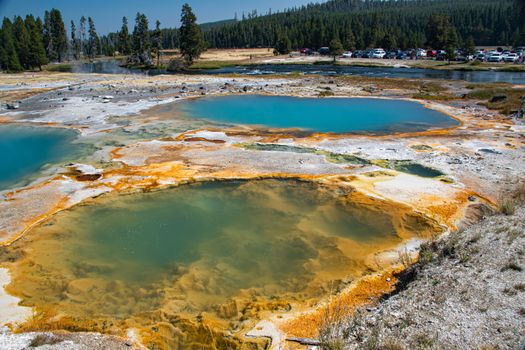
Rotorua, NZ, is a geothermal wonderland of bubbling mud pots and sulfur springs. Most Americans head to Yellowstone for this, but if you want the New Zealand "vibe" without the 40-bus-deep crowds, go to Lassen Volcanic National Park.
Lassen is one of the few places on earth where all four types of volcanoes are present. The Bumpass Hell trail (yes, that’s the real name) takes you past roaring steam vents (fumaroles) and boiling pools tinted in shades of ochre and turquoise.
- The Insider Edge: Visit the Devil’s Kitchen in the Warner Valley. It’s a less-visited geothermal area that feels like a secret portal to the center of the earth.
- Pro-Tip: The park is often snowed in until July. Plan your trip for August or September to ensure the high-altitude trails are clear.
6. Grand Teton National Park, Wyoming: The Remarkables' Rival
Queenstown sits at the base of The Remarkables, a mountain range that rises abruptly from the plains. The Grand Tetons do the same thing, but with more "teeth." Because there are no foothills, the transition from the flat valley of Jackson Hole to the 13,000-foot peaks is instantaneous and jarring.
- The Insider Edge: Take the boat shuttle across Jenny Lake and hike up to Inspiration Point. From there, continue into Hidden Falls. The jagged granite spires above you are the closest thing to the "Misty Mountains" you’ll find on this continent.
- Pro-Tip: Wake up at 5:00 AM to catch the "Alpenglow" at Schwabacher Landing. The reflection of the Tetons in the Snake River at dawn is the shot that wins awards.
7. The Sawtooth Mountains, Idaho: The Hidden Southern Alps
If you want the rugged, "off-the-beaten-path" feel of New Zealand’s Wanaka region, the Sawtooths are your destination. This is high-alpine wilderness at its finest, with over 300 jagged peaks and 200 alpine lakes.
The granite here is incredibly light-colored, making the mountains glow even under a midday sun. The town of Stanley, Idaho, serves as your "Wanaka"—a low-key, high-adventure basecamp.
- The Insider Edge: Hike to Alice Lake. The jagged "Dragon’s Back" ridge reflecting in the water is a dead ringer for the scenery in the Lord of the Rings film trilogy.
- Pro-Tip: Soak in the Boat Box Hot Springs right off Highway 75. It’s a literal metal tub fed by a natural hot spring pipe right next to the Salmon River.
---
Quick Facts & Logistics
| Destination | Best Time to Visit | Estimated Daily Cost ($) | Closest Major Airport | NZ Counterpart |
| :--- | :--- | :--- | :--- | :--- |
| Kenai Fjords, AK | July - August | $250 - $400 | Anchorage (ANC) | Milford Sound |
| The Palouse, WA | June (Green) / Aug (Gold) | $120 - $180 | Spokane (GEG) | Hobbiton / Waikato |
| Glacier NP, MT | July - September | $200 - $350 | Kalispell (FCA) | Southern Alps |
| Olympic NP, WA | May - September | $150 - $250 | Seattle (SEA) | West Coast / Haast |
| Lassen Volcanic, CA | August - October | $130 - $200 | Reno (RNO) | Rotorua |
| Grand Teton, WY | June - September | $300 - $500 | Jackson Hole (JAC) | The Remarkables |
| Sawtooths, ID | July - September | $140 - $220 | Boise (BOI) | Lake Wanaka |
---
The Verdict
You don't need to cross the International Date Line to find epic scales and soul-stirring landscapes. Whether it’s the mossy silence of the Olympic Peninsula or the jagged defiance of the Tetons, these American landscapes that rival New Zealand are ready for you right now.
Pack your boots, grab your camera, and remember: the greatest adventure isn't always the one furthest away. It’s the one that makes you feel small in the best way possible.