Hey Tripsora fam!
Let me tell you a story. It was a scorching afternoon in Bali, and I was zipping through the rice paddies on a scooter, feeling on top of the world. Suddenly, a stray dog darted out, and before I knew it, I was picking myself up from the dirt, my knee throbbing, and the scooter looking significantly less chic. Panic set in. "This is it," I thought. "Thousands of dollars in medical bills, a ruined trip, and a very unhappy bank account."
But here’s the kicker: I walked away from that incident (limped, actually) with nothing more than a few scrapes, a story to tell, and not a single medical bill paid out of my own pocket. How? Because I knew a few things about travel insurance that most people, even the most seasoned globetrotters and seemingly invincible Instagram influencers, either overlook or simply don't want you to know.
We see these perfectly curated feeds: flawless sunsets, daring cliff jumps, gourmet meals. What you don't see are the behind-the-scenes mishaps, the lost luggage nightmares, the unexpected hospital visits, or the canceled flights. And crucially, you don't often hear how they navigate these financial pitfalls. Spoiler alert: they’re not just winging it. They’re usually incredibly savvy with their travel insurance, or they’re paying a hefty price for not being.
Today, I’m pulling back the curtain. Forget what you think you know about travel insurance. We’re diving deep into the often-misunderstood clauses, the clever hacks, and yes, the "loopholes" that can literally save you thousands of dollars, turn a travel nightmare into a minor inconvenience, and ensure your adventures stay epic, not expensive. This isn't about shady dealings; it's about being informed, strategic, and empowered. Ready to unlock the secrets? Let's go!
1. The Credit Card Cavalry: Your First Line of Defense (And Often Free!)
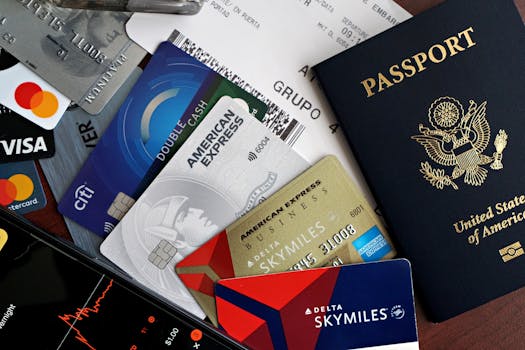
This is probably the biggest, most overlooked "loophole" in the travel insurance game, and it’s one that countless travelers (and yes, many influencers who pay for premium cards) leverage without even realizing its full power. Many high-tier credit cards offer a surprising amount of travel insurance coverage – often for free, simply by booking your trip with that card.
The Loophole:
You might already be covered for trip delays, cancellations, lost luggage, rental car insurance, and even emergency medical evacuation without buying a separate policy.
How it Works:
* Check Your Card Benefits: Dig into the benefits guide for your premium travel credit cards (think Chase Sapphire Reserve, Amex Platinum, Capital One Venture X, etc.). You'll often find extensive coverage listed there.
* Book with the Right Card: To activate these benefits, you must pay for your flights, hotels, or rental cars with the eligible card. For example, my Chase Sapphire Reserve card provides up to $500 per ticket for trip delay reimbursement after just a 6-hour delay, covering meals and lodging. It also offers primary rental car insurance, saving me $15-30 a day on the rental company's often overpriced coverage.
* Be Aware of Limits and Exclusions: While robust, credit card coverage usually has limits. For instance, medical coverage might be secondary (meaning it kicks in after your primary health insurance) or have lower limits than a dedicated travel insurance policy. It's fantastic for trip inconveniences but might not be enough for a major medical emergency in a country with high healthcare costs.
My Anecdote:
Last year, a flight delay in Istanbul left me stranded for 10 hours. Instead of panicking, I remembered my credit card benefits. I booked a nice airport hotel, enjoyed a lavish dinner, and bought some essentials. When I got home, I submitted the receipts, and within weeks, my card issuer reimbursed me for everything. That's easily $200-$300 saved just by using the right plastic!
Actionable Tip:
Before any trip, review your credit card benefits. Print out the relevant sections or save them to your phone. This knowledge is your first, often free, layer of protection.
2. Annual vs. Single-Trip Policies: The Math That Saves Thousands
Many travelers default to buying single-trip policies, especially for longer or more exotic adventures. But if you’re a frequent flyer, a digital nomad, or someone who takes multiple trips a year, this is where a significant "loophole" in your spending habits can be found.
The Loophole:
For multi-trip travelers, an annual multi-trip policy is almost always significantly cheaper than buying multiple single-trip policies, often saving you hundreds, if not thousands, over a year.
How it Works:
* Calculate Your Travel Frequency: How many trips do you take in a 12-month period? Even 2-3 international trips can make an annual policy worthwhile.
* Compare Costs: Get quotes for both a single-trip policy for your longest upcoming trip and an annual multi-trip policy from reputable providers like World Nomads, SafetyWing, or Allianz. You'll likely see a substantial difference. An annual policy might cost $300-$500, whereas three separate month-long policies could easily total $600-$900+.
* Understand Coverage Limitations: Annual policies typically have a maximum duration per trip (e.g., 30, 45, or 90 days per individual trip). If you're planning a year-long backpacking adventure, you'll still need a specialized long-term or single-trip policy. But for shorter, frequent stints, it's a no-brainer.
My Anecdote:
For years, I bought single-trip policies. I'd go to Thailand for two weeks, then Mexico for three, then Europe for a month. Each time, I'd go through the quote process. One year, I tallied up my spending and realized I'd spent over $700 on individual policies. The next year, I bought an annual policy for about $400 that covered unlimited trips up to 45 days each. That was an instant $300 in my pocket, and the peace of mind knowing I was covered no matter how many spontaneous weekend getaways I booked was priceless.
Actionable Tip:
If you travel more than twice a year, immediately look into annual multi-trip policies. It’s a simple switch that yields huge savings.
3. The "Pre-Existing Condition" Predicament: Navigating the Medical Minefield
This is arguably the most critical and often misunderstood aspect of travel insurance, especially for older travelers or those with chronic health issues. Many standard policies explicitly exclude "pre-existing conditions," which can be a devastating shock if you have a medical emergency abroad.
The Loophole:
Many policies will cover pre-existing conditions if you purchase your insurance within a specific "early purchase window" (often 10-21 days) of your initial trip deposit, and if your condition is "stable" and you're "medically able to travel" at the time of purchase. Some also offer specific "Pre-Existing Condition Waivers."
How it Works:
* Understand the Definition: A pre-existing condition isn't just a major illness. It can be anything for which you've sought medical advice, diagnosis, care, or treatment (or had symptoms) within a specific "look-back period" (e.g., 60-180 days) before your policy's effective date.
* Early Purchase is Key: To get a pre-existing condition waiver, you almost always need to buy your policy very soon after booking your first non-refundable trip component (e.g., flight, cruise, tour). This shows the insurer you're not buying it because you suddenly developed an issue.
* Be Honest and Thorough: Disclose all relevant medical history during the application process. Trying to hide something will invalidate your claim. You might need a doctor's note confirming your stability to travel.
* Look for Specific Waivers: Some premium policies or add-ons explicitly offer pre-existing condition waivers. Read the fine print carefully to understand the exact terms.
My Anecdote:
My aunt, an avid cruiser, developed a heart condition a few years ago. She thought her travel days were over. But after extensive research, she found a policy that offered a pre-existing condition waiver because she purchased it within 14 days of booking her Alaska cruise. She got a letter from her cardiologist, paid a slightly higher premium, and cruised worry-free. A few months later, she had a minor dizzy spell on board, and all her medical care was covered because she'd navigated this "loophole" correctly.
Actionable Tip:
If you or a travel companion have any pre-existing medical conditions, research policies with "Pre-Existing Condition Waivers" immediately after booking your trip. Don't wait!
4. "Adventure Activities" – Reading the Fine Print Before You Leap
That epic bungee jump in New Zealand, the scuba diving certification in the Maldives, or the trekking expedition in Nepal – these are the moments that make for incredible Instagram content. But they are also prime examples of activities that can quickly void your standard travel insurance if you haven't checked the fine print.
The Loophole:
Many "extreme" or "adventure" activities are excluded by default, but you can often add coverage for them for a small additional premium, or discover that certain "mild" adventure activities are already covered.
How it Works:
* Define "Extreme": What one insurer considers extreme, another might not. Snorkeling is usually covered, but deep-sea diving might require an add-on. Hiking on marked trails is usually fine, but mountaineering with ropes is often excluded.
* Check the Exclusions List: Every policy has a list of excluded activities. Read it thoroughly before you book that paragliding experience in Switzerland.
* Add-On Coverage: If your desired activity is excluded, ask about an "adventure sports rider" or "hazardous activities upgrade." This typically costs a small percentage more but can be life-saving. For example, specific diving insurance (like DAN) might be necessary for serious divers.
My Anecdote:
A friend of mine was getting her advanced open water diving certification in Koh Lanta, Thailand. She had standard travel insurance. During a deep dive, she experienced a minor decompression sickness scare. Luckily, it wasn't serious, but it required immediate medical attention and hyperbaric chamber treatment. Her standard policy almost didn't cover it because "diving below X meters" was an exclusion. She narrowly avoided a massive bill because the dive shop manager vouched that the incident occurred just above the exclusion depth. It was a close call that taught us all a valuable lesson.
Actionable Tip:
If your trip involves anything more adventurous than swimming in a pool, check your policy's activity exclusions. If in doubt, call the insurer. It's better to pay a small add-on than face a huge bill.
5. The "Proof of Loss" Puzzle: Document Everything Like a Detective!
This isn't a loophole in the traditional sense, but it’s a critical piece of the puzzle that separates a successful claim from a denied one. Many travelers, especially in the chaos of an emergency, fail to gather the necessary documentation, effectively closing the "loophole" to their own reimbursement.
The Loophole:
Knowing exactly what kind of proof insurers require before you need it, and meticulously documenting everything, makes claiming thousands much easier.
How it Works:
* Photos, Photos, Photos: Take pictures of everything: your luggage before you check it, the damage to a rental car, the condition of a hotel room, your injuries, receipts for emergency purchases.
* Official Reports: If something is stolen, get a police report immediately. If your flight is delayed or canceled, get a letter from the airline stating the reason and duration. If you're hospitalized, get detailed medical records and invoices.
* Keep Receipts: Every single receipt for emergency purchases (clothing, toiletries, meals during a delay, medication) is crucial.
* Contact Information: Get names and contact details of any witnesses, airline staff, hotel managers, or medical personnel.
* Digital Copies: Scan or photograph all important documents (passport, visas, insurance policy, booking confirmations) and store them in a cloud service (Google Drive, Dropbox) accessible from anywhere.
My Anecdote:
My backpack was stolen from a hostel locker in Rome. Devastated, I remembered the advice to document everything. I immediately went to the local police station (a harrowing experience in itself) and got a police report. I had photos of my backpack's contents before the trip, and I diligently kept receipts for all replacement items I had to buy (a new phone, clothes, toiletries). When I got home, I submitted everything, and my claim was processed smoothly. Without that police report and detailed receipts, I would have been out hundreds of euros.
Actionable Tip:
Be a documentation fanatic. Keep a small travel journal or a dedicated folder on your phone for photos of documents and receipts. In an emergency, your future self will thank you.
6. Trip Cancellation & Interruption: The "Cancel For Any Reason" (CFAR) Secret
Standard trip cancellation insurance covers specific, named perils: illness, injury, death, natural disaster, etc. But what if you just... change your mind? Or a personal situation arises that isn't covered by the policy? This is where the premium, but incredibly valuable, "Cancel For Any Reason" (CFAR) add-on comes into play.
The Loophole:
CFAR allows you to cancel your trip for any reason not typically covered by standard policies and receive a partial refund (usually 50-75% of your non-refundable costs). This is the ultimate flexibility.
How it Works:
* It's an Add-On: CFAR is rarely included in basic policies. It's an optional upgrade that can add 40-50% to your policy cost.
* Strict Purchase Window: Like pre-existing condition waivers, CFAR usually has a very strict purchase window – often within 10-21 days of your initial trip deposit. This prevents people from buying it last minute when they foresee an issue.
* Partial Reimbursement: Don't expect 100% back. Most CFAR policies reimburse 50-75% of your non-refundable trip costs.
* When It Makes Sense: CFAR is ideal for expensive, non-refundable trips when you anticipate potential personal uncertainty (e.g., job changes, family issues), or if the destination's political or health situation is volatile but not yet officially "uninsurable."
My Anecdote:
A friend had planned a dream safari trip to Kenya. Two weeks before departure, civil unrest unexpectedly flared up in a neighboring region, making her feel uneasy about traveling, even though her specific safari area was deemed safe by the State Department (and thus not covered by standard cancellation). Because she had invested in CFAR when she booked the trip months earlier, she was able to cancel, get 75% of her significant non-refundable costs back, and rebook for a safer time without losing her entire investment. That was thousands of dollars saved from a potential total loss.
Actionable Tip:
For high-cost, non-refundable trips where flexibility or peace of mind is paramount, consider the CFAR add-on. Weigh the cost against the potential loss of your entire trip investment.
7. The "Medical Evacuation" Lifeline: More Than Just an Ambulance Ride
Many travelers focus on medical treatment coverage, but often overlook or underestimate the importance of medical evacuation. This isn't just an ambulance ride; it's the cost of getting you from a remote village clinic to a major hospital, or even from a foreign country back home for specialized care. These costs can easily run into the tens or even hundreds of thousands of dollars.
The Loophole:
Ensuring you have robust medical evacuation coverage, especially when traveling to remote or less developed areas, is a non-negotiable "loophole" that protects you from catastrophic financial burden.
How it Works:
* High Limits are Crucial: Look for policies with medical evacuation limits of at least $100,000, but ideally $250,000 to $500,000 if you're venturing far off the beaten path (e.g., trekking in the Himalayas, diving in remote Pacific islands).
* "Medically Necessary": Understand that evacuation must be deemed "medically necessary" by the insurer's medical team. It's not a luxury ride home; it's about getting you the care you need.
* Repatriation of Remains: While grim, good evacuation policies also include repatriation of remains, a cost that can be astronomical.
* Emergency Assistance Services: Most policies with evacuation coverage also come with 24/7 emergency assistance, which can be invaluable for coordinating care, finding doctors, and navigating foreign medical systems.
My Anecdote:
While mountain biking in Patagonia, a fellow traveler took a nasty spill, breaking his leg in multiple places. He was miles from the nearest paved road, let alone a hospital. His travel insurance not only covered the initial treatment at a small local clinic but also arranged for a helicopter evacuation to a major hospital in Santiago, Chile, where he could receive specialized surgery. The cost of that helicopter alone would have been upwards of $20,000, not to mention the hospital bills. His robust medical evacuation coverage saved him from financial ruin.
Actionable Tip:
Never skimp on medical evacuation coverage, especially for adventurous or remote travel. Prioritize high limits, and make sure you understand the emergency contact procedures before you leave.
---
Unlocking Your Smart Travel Potential
So there you have it, fellow adventurers. These aren't abstract concepts; these are real-world strategies that have saved me and countless others thousands of dollars and untold stress. The perfectly curated lives of Instagram influencers might suggest a world without mishaps, but trust me, behind every flawlessly recovered trip is usually a very smart traveler who understood their insurance.
Don't be the traveler who learns these lessons the hard way. Be the one who's prepared, empowered, and ready for anything. Travel insurance isn't a gamble; it's an investment in your peace of mind and your financial security. By understanding these "loopholes" and reading the fine print, you're not just buying a policy; you're buying the freedom to truly explore, knowing you're protected.
Now, go forth, explore, and travel smarter! What are your go-to travel insurance hacks? Share them in the comments below! And if this post saved you a future headache (or thousands!), make sure to share it with your travel buddies. Let's spread the word and empower every traveler!
#SmartTravel #TravelInsuranceHacks #BudgetTravel #TravelSmarter #TripsoraSecrets
---