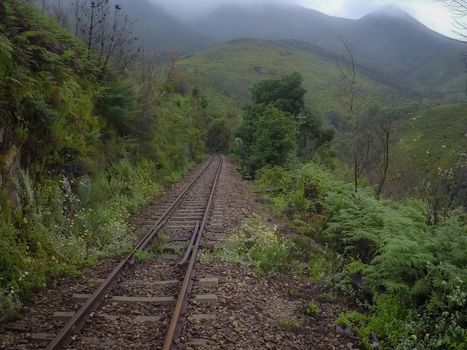
The Death of the Flight Deck and the Rebirth of the Rails
I stepped off the platform at Chur station, my boots crunching on fresh alpine frost, and inhaled the crisp scent of sub-zero pine resin and freshly roasted espresso. Above me, the sky was a bruised indigo, but inside the crimson carriages of the Rhaetian Railway, warm amber light spilled onto timber floors. There were no TSA body scanners here. No barking gate agents, no strip-lighting anxiety, and no standardized liquid containers. Just a gloved conductor tipping his cap as I boarded with a hot paper cup of espresso and a warm flakey croissant.
Ten minutes later, as the electric engine hummed silently out of the valley and tilted into a steep ascent toward mountain passes carved by ancient ice, I leaned my head against the panoramic glass window. Below, icy river torrents churned through narrow gorges, and medieval castles clung to limestone crags.
Flying sells us speed, but delivers dead time: hours wasted sitting in grey terminal hubs, stripped of shoes and dignity, only to be stuffed into an aluminum tube at 35,000 feet where the view rarely changes from a blanket of smoggy white.
Overland rail offers something air travel killed decades ago: a direct, unbroken conversation with the landscape. Here are five extraordinary train journeys more scenic than flying right now that prove ground-level velocity is the ultimate travel luxury.
---
1. The Bernina Express: Switzerland to Italy
Glaciers, Spirals, and Alpine Espresso
Crossing the High Alps from Chur, Switzerland, down to Tirano, Italy, the Bernina Express isn’t merely a transit line—it is an extraordinary feat of early 20th-century civil engineering. Traversing 55 tunnels and 196 bridges over a four-hour stretch, this UNESCO World Heritage railway tackles gradients of up to 7% without using a single cogwheel.
As the train climbs through the Engadin valley, the larch forests yield to the stark, slate-grey moraines of the Morteratsch Glacier. At Ospizio Bernina, elevated at 2,253 meters (7,391 feet) above sea level, the train skims alongside Lago Bianco, whose milky turquoises freeze solid into brilliant white ice sheets in winter.
The descent into Italy provides one of the greatest visual transitions on earth. Within two hours, snowfields collapse into vine-terraced hillsides. The climax arrives at the Brusio Circular Viaduct, where the train loops a full 360 degrees over a stone bridge to manage the rapid drop in elevation.
```
ROUTE SPECIFICS:
- Departure / Arrival: Chur (Switzerland) to Tirano (Italy)
- Distance: 122 km (76 miles)
- Duration: 4 hours 15 minutes
```
- The Insider View: Unlike European air travel—where budget carriers drop you at Milan Bergamo, miles from anywhere—the Bernina Express deposits you straight into downtown Tirano. You can be sitting at a sunlit wooden table eating local pizzoccheri (buckwheat pasta tossed with Savoy cabbage and melted Bitto cheese) within fifteen minutes of pulling into the station.
> Pro-Tip: Skip the overpriced panoramic tourist cars if you want better photography. Book the regional local train running on the exact same tracks. The windows in the standard cars open completely at the top, allowing you to shoot glare-free, ultra-sharp photos without reflections from the double-paned glass. Sit on the right side heading south from Chur to catch the iconic drop down the Landwasser Viaduct.
---
2. The West Highland Line: Scotland
Peat Bogs, Dark Lochs, and Highland Folklore
While regional flights between London, Edinburgh, and the Western Isles hover above a grey overcast haze, the West Highland Line runs straight through the wild, tempestuous heart of the Scottish Highlands. The journey from Glasgow Queen Street up to the coastal fishing port of Mallaig takes you far beyond the reach of paved highways.
Leaving the urban sprawl behind, the train traces the eastern banks of Loch Lomond before ascending onto the vast, lonely expanse of Rannoch Moor. This 50-square-mile wilderness of peat bogs, dark heather pools, and granite boulders feels entirely untouched by time. In rainy weather—which is frequent and visually stunning—hundreds of ephemeral waterfalls cascade down the black rock faces of Glen Coe in the distance.
Beyond Fort William, the line curves around Loch Eil before traversing the magnificent 21-arch Glenfinnan Viaduct. Looking out the window, you see the train gently sweeping across a concrete arc 100 feet above the valley floor, with the monument to Bonnie Prince Charlie standing guard over Loch Shiel below.
```
ROUTE SPECIFICS:
- Departure / Arrival: Glasgow Queen Street to Mallaig (Scotland)
- Distance: 264 km (164 miles)
- Duration: 5 hours 30 minutes
```
- The Insider View: Flying to northern Scotland means missing the subtle shift in ecology and culture. On the train, as you head west, the pine trees vanish, replaced by Atlantic oakwoods and wild coastal air scented with peat smoke and damp birch bark.
> Pro-Tip: If you want to ride the line behind a vintage steam locomotive, book the Jacobite Steam Train early (tickets sell out 6 months in advance). If it is booked solid, simply take the regular ScotRail service. It uses the exact same tracks, costs a fraction of the price, features larger, cleaner windows, and lets you hop off at remote request-stops like Corrour—the highest station in the UK, accessible only by rail or a long walk.
---
3. The Hiram Bingham & PeruRail Sacred Valley: Peru
Cloud Forests, Inca Citadel Tracks, and Pisco Sours
Flying into Cusco lands you directly at 3,400 meters, often triggering immediate mountain sickness. The smart, scenic alternative is to drop straight into the Sacred Valley and take the rail line alongside the roaring Urubamba River down to Machu Picchu Pueblo (Aguas Calientes).
Whether you choose the luxury of Belmond’s Hiram Bingham or the panoramic dome carriages of PeruRail’s Vistadome, this route cuts through steep, jungle-draped canyon walls where Inca agricultural terraces cling to vertical granite cliffs.
As the train rolls lower into the cloud forest, the ecosystem shifts dramatically. High Andean scrub gives way to tree ferns, wild orchids, and hanging mosses. The air grows warmer and humid, filled with the scent of wild damp earth and blooming lilies. In the observation car at the rear of the train, musicians play traditional charango melodies while bartenders shake cold pisco sours topped with drops of aromatic Angostura bitters.
```
ROUTE SPECIFICS:
- Departure / Arrival: Poroy (Cusco) or Ollantaytambo to Aguas Calientes
- Distance: 93 km (58 miles)
- Duration: 3 hours 30 minutes (from Poroy)
```
- The Insider View: Air options to Machu Picchu don't exist—you have to travel over land anyway. Taking the train from Ollantaytambo allows you to watch the cloud shadows move across ancient, hand-carved stone ruins that remain completely invisible from any highway.
> Pro-Tip: Request seats on the left side when traveling from Ollantaytambo to Aguas Calientes. You’ll get unobstructed, front-row views of the rushing white-water torrents of the Urubamba River and the abrupt appearance of the Patallacta archaeological site carved into the valley floor.
---
4. The Rocky Mountaineer: First Passage to the West
Continental Divides and Canyon Depths in Canada
Commercial flights between Vancouver and Calgary fly high above the Canadian Rockies, offering little more than distant white peaks through tiny plastic windows. The Rocky Mountaineer route between Vancouver and Banff/Lake Louise puts you inside the jaw-dropping canyons of British Columbia and Alberta.
This all-daylight glass-domed journey follows historic trade paths: the Fraser River, the Thompson Canyon, and the steep rock faces of the Kicking Horse Pass. Sitting in double-decker GoldLeaf carriages, you look up through heated glass roofs at 10,000-foot granite monoliths, soaring bald eagles, and dense cedar forests.
The engineering highlights are the world-famous Spiral Tunnels. Built inside Mount Ogden and Cathedral Mountain, these twin tunnels allow the train to loop back on itself inside the mountain to safely navigate an otherwise impossible 4.5% mountain slope. You can watch the front engine emerge from the lower tunnel portal directly beneath your own carriage as you enter the upper mouth.
```
ROUTE SPECIFICS:
- Departure / Arrival: Vancouver to Banff / Lake Louise (British Columbia/Alberta)
- Distance: 950 km (590 miles)
- Duration: 2 Days (overnight stop in Kamloops)
```
- The Insider View: This is slow travel perfected. The onboard culinary team serves high-end regional fare—such as pan-seared Pacific salmon and Alberta prime beef short ribs paired with British Columbia VQA wines—while stewards announce grizzly bear sightings over the loudspeaker, slowing the train down so every passenger can take a clear photograph.
> Pro-Tip: Choose the GoldLeaf Service. While SilverLeaf is comfortable, GoldLeaf gives you access to an open-air lower-level viewing platform. Standing outside on the platform, feeling the cool mountain mist off the Fraser River and hearing the echo of the diesel engine off the canyon walls, is an unforgettable sensory experience that no flight deck can match.
---
5. The Flåm Railway (Flåmsbana): Norway
Vertical Fjords and Roaring Waterfalls
Short-haul flights within Scandinavia are efficient, but they completely miss the country's most dramatic landscapes. The Flåm Railway in western Norway is one of the steepest standard-gauge rail lines in the world, dropping 863 meters (2,831 feet) in just 20 kilometers of track down to the edge of the Aurlandsfjord.
Starting at the high-altitude junction of Myrdal on the Oslo-Bergen main line, the train immediately twists down a series of tight horseshoe turns carved into raw rock. Looking out the window, you glance down into the narrow Flåmsdalen valley, where rustic wooden farmhouses look like tiny red dots scattered across vivid green meadows.
Halfway down, the train comes to a brief stop at the roaring Kjosfossen Waterfall. Here, thunderous mountain meltwater cascades down a 93-meter drop, spraying icy mist directly onto the wooden observation platform attached to the tracks.
```
ROUTE SPECIFICS:
- Departure / Arrival: Myrdal to Flåm (Norway)
- Distance: 20.2 km (12.5 miles)
- Duration: 55 minutes
```
- The Insider View: Rather than dealing with coastal mountain flying, airport transfers, and luggage carousels, taking the main line train from Bergen to Myrdal and connecting to the Flåmsbana creates a continuous, stress-free green travel corridor through the wild heart of Norway's fjord country.
> Pro-Tip: If traveling during peak summer season (June to August), book the earliest departure out of Myrdal (around 08:30 AM). The later trains fill up with day-trippers coming off cruise ships docked at Flåm, making the platforms crowded. The early morning light striking the sheer granite walls of the valley makes for much better photos.
---
Train vs. Plane: The Door-to-Door Time Reality Check
A common myth is that flying is always faster. But when you factor in traveling to distant airports, arriving two hours early for security, navigating TSA lines, waiting at the baggage claim, and riding airport transfer buses into city centers, the time gap vanishes on short-to-medium-haul routes.
| Route / Comparison | Door-to-Door Flight Time | Door-to-Door Train Time | Scenic Score (Out of 10) | Carbon Footprint Reduction |
| :--- | :--- | :--- | :--- | :--- |
| Zurich to Milan (via Bernina Express) | 5 hrs 30 mins (Air + Transfers) | 4 hrs 15 mins (Direct City-Center) | 10 / 10 | ~85% Lower |
| Glasgow to Mallaig | N/A (No commercial flights) | 5 hrs 30 mins | 9.5 / 10 | ~80% Lower |
| Vancouver to Banff | 6 hrs 00 mins (Flight + Drive) | 2 Days (Scenic Leisure) | 10 / 10 | ~70% Lower |
| Oslo to Flåm | 5 hrs 15 mins (Flight + Bus) | 5 hrs 45 mins (Train + Flåmsbana) | 9.8 / 10 | ~90% Lower |
---
Logistical Quick Facts: Planning Your Journey
The Master Planning Matrix
| Route Name | Estimated Fare Range ($ USD) | Best Time to Visit | How to Get There & Book |
| :--- | :--- | :--- | :--- |
| Bernina Express | $70 - $160 | Year-round (Jan for snow; Oct for fall foliage) | Fly to Zurich; take SBB train to Chur. Book via SBB.ch or RhB.ch up to 90 days in advance. |
| West Highland Line | $40 - $95 | May to September (Long daylight hours) | Fly to Glasgow; walk to Queen Street Station. Book tickets on ScotRail.co.uk. |
| Hiram Bingham | $500 - $1,100 (Luxury) | April to October (Dry season) | Fly to Cusco; shuttle to Poroy or Ollantaytambo. Book directly via Belmond.com or PeruRail.com. |
| Rocky Mountaineer | $1,500 - $3,200 (All-inclusive) | May to October | Fly to Vancouver International (YVR). Book packages via RockyMountaineer.com. |
| Flåm Railway | $65 - $85 | May to September | Train from Bergen or Oslo to Myrdal Station. Book tickets via Vy.no or VisitFlam.com. |
---
Master Travel Hacks: How to Ride Like an Insider
- Pack Light, Pack Smart: Unlike airlines that charge steep fees for heavy bags, trains allow you to carry your luggage directly on board. Keep your gear light enough to lift into overhead racks above your seat.
- Embrace the Dining Car: Don't settle for dry sandwiches from station vending machines. High-end routes like the Rocky Mountaineer and Hiram Bingham offer gourmet multi-course meals. On public lines like the Swiss or Scottish routes, pack local cheeses, fresh bread, cured meats, and a bottle of wine for a trackside picnic.
- Bring a Portable Power Bank: While modern trains feature standard AC outlets and USB ports under the seats, older heritage coaches or local trains might not. A high-capacity 20,000mAh power bank keeps your phone, camera, and tablet charged during long shooting sessions.
- Use Rail Passes for Savings: If you're planning multiple journeys across Europe, invest in a Eurail / Interrail Pass or a Swiss Travel Pass. These passes often cover scenic routes like the Bernina Express in full, requiring only a small seat reservation fee (roughly $20–$30).
The next time you plan a journey, skip the flight search engines. Choose ground-level travel, grab a seat by the window, watch the world unfold outside, and make the journey the best part of your trip.
---