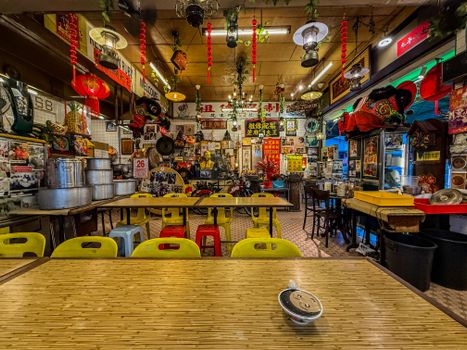
The world, as I've come to know it through years of travel blogging, is a tapestry of hidden narratives, whispered secrets, and experiences waiting just beyond the obvious. We chase landmarks, queue for museums, and dutifully check off bucket list items. But for me, the true magic often lies in the detours, the cryptic clues, and the thrill of a genuine discovery. And nowhere is this more profoundly true than in the realm of food.
It started innocently enough, a chance encounter with a local in a bustling Moroccan souk who, seeing my wide-eyed curiosity, scrawled a series of symbols on a napkin and mumbled instructions in broken English. Following his lead felt like stepping into a real-life Indiana Jones movie, navigating winding alleys, knocking on an unmarked door, and uttering a specific phrase. What I found inside wasn't a hidden treasure chest, but a tiny, family-run tagine spot, serving a lamb dish so tender it melted on the tongue, infused with spices I’d never tasted before. The entire experience – the hunt, the secrecy, the incredible reward – wasn't just a meal; it was a revelation. It changed how I viewed food, transforming dining from a mere necessity into an epic quest.
Since then, I’ve dedicated a significant portion of my travels to seeking out these culinary treasure hunts. These aren't just restaurants; they're portals to different worlds, demanding a sense of adventure before they even serve the first bite. They’ve challenged me, delighted me, and yes, changed my life forever. Here are some of the most unforgettable journeys I’ve embarked on, leading to meals that still haunt my dreams.
Le Serpent Caché: Paris's Whispering Passage Bistro
Paris. The city of lights, love, and undeniably, incredible food. But beyond the Michelin stars and iconic bistros lies a clandestine world. My hunt for Le Serpent Caché began with a tip from an underground art collective I’d connected with online. Their email contained a cryptic riddle about a "serpent guarding a hidden passage near the Marais," and a specific date. After deciphering the poetic clues, I found myself standing before a vibrant piece of street art depicting a coiled serpent, tucked away in one of Paris's lesser-known historical passages.
The riddle's final line led me to a worn brass knocker on an otherwise nondescript, unmarked black door, nestled between a dusty antique shop and a closed bakery. My heart thrummed as I gave the specific sequence of knocks provided in the email. A small peephole slid open, a pair of eyes scrutinized me, and after I whispered the password – "Étreinte du Serpent" (Serpent's Embrace) – the heavy door creaked open.
Inside, the world transformed. Gone were the cobblestones and Parisian bustle, replaced by a dimly lit, intimate space with velvet banquettes, antique mirrors, and a hushed, conspiratorial atmosphere. The air was thick with the scent of truffle and aged wine. Le Serpent Caché served a modern French menu, small plates designed for sharing, but elevated to an art form. Their deconstructed Boeuf Bourguignon (€38) was a revelation – slow-cooked short rib that dissolved with a touch, paired with silken potato espuma and crispy lardons. The sommelier, a charming woman with a knowing smile, recommended a biodynamic Burgundy that perfectly complemented every dish.
Why it changed me:
It was the feeling of being initiated into a secret society, of tasting a side of Paris reserved only for those willing to seek it out. It taught me that even in the most famous culinary cities, there’s always a deeper layer, a hidden story waiting to be savored. The intimacy fostered genuine connection, not just with my dining companion, but with the spirit of the city itself.
- Estimated Price: €€€€ (Expect €150-€200+ per person with wine)
- Instagram-worthy moment: The entrance itself, the atmospheric interior, and the artful plating of each dish.
Kagami no Kuni: Tokyo's Ephemeral Alleyway Izakaya
Tokyo is a city of sensory overload, a neon-drenched labyrinth where even the most familiar sights become extraordinary. Yet, amidst the towering skyscrapers and bustling Shibuya crossings, there are pockets of profound stillness and hidden culinary wonders. My quest for Kagami no Kuni ("Land of Mirrors") began not with a riddle, but with a tiny, exquisite origami crane left on my hotel pillow, accompanied by a single character and a time.
Following the character led me deep into the narrow, lantern-lit alleys of Shinjuku Golden Gai, a district famous for its tiny, unique bars. The time on the crane was 8 PM. At precisely that moment, a man with kind eyes and a traditional apron appeared from the shadows, holding a small, antique mirror. He simply nodded, gestured for me to follow, and led me down an even narrower, unmarked alley I hadn't noticed before, between two seemingly solid buildings.
He stopped at a door no wider than my shoulders, adorned only with a faded, hand-painted symbol I recognized from the origami crane. He tapped it twice, then once, and the door slid open to reveal a space so small, it felt like stepping into a jewel box. Kagami no Kuni was a minimalist izakaya, seating perhaps six people at a polished cypress counter. The chef, a quiet master, served an ever-changing omakase menu (¥15,000-¥20,000, ~€100-€130), focusing on rare seasonal ingredients and obscure sake pairings.
The grilled Miyazaki beef skewers, seared to perfection over binchotan charcoal, were sublime. But it was the dish of uni (sea urchin) served with a warm, subtly sweet custard and a sprinkle of yuzu zest that truly transported me. Each bite was a delicate balance of ocean brininess, creamy texture, and citrusy brightness.
Why it changed me:
It was a masterclass in subtlety and the profound beauty of simplicity. Despite the language barrier, the chef communicated through his food, each dish a testament to respect for ingredients and meticulous craft. It taught me that the most profound experiences often come in the smallest, most unassuming packages, and that true connection transcends words.
- Estimated Price: ¥¥¥¥ (Expect €100-€150+ per person with sake)
- Instagram-worthy moment: The intimate counter dining, the chef's precise knife work, and the artful presentation of each dish.
La Cucina Nascosta: Tuscany's Secret Vineyard Feast
Tuscany. The rolling hills, cypress trees, and sun-drenched vineyards are a postcard come to life. But away from the well-trodden paths of Chianti Classico, there are families preserving culinary traditions so authentic, they share them only with those deemed worthy of the journey. My quest for La Cucina Nascosta ("The Hidden Kitchen") began after befriending a ceramic artist in a small Tuscan village. Over an espresso, she confided in me about a family who hosts a monthly, private dinner on their secluded vineyard. She gave me a name, a set of coordinates, and a specific phrase to use when contacting them.
The instructions were precise: arrive at a designated, unmarked crossroads at 6 PM sharp. There, a weathered Fiat Panda, driven by a jovial man named Marco, met me. We embarked on a winding, dusty drive through olive groves and vineyards, deeper and deeper into the Tuscan countryside, until we arrived at a sprawling, ancient farmhouse bathed in the golden light of the setting sun.
La Cucina Nascosta wasn't a restaurant in the traditional sense, but a family's home transformed for one night. The long wooden table, set under a pergola heavy with grapevines, groaned under the weight of antipasti. The multi-course tasting menu (€180-€250 per person, all-inclusive of wine) was a celebration of hyper-local, seasonal ingredients. We started with hand-rolled pici pasta with a wild boar ragu, slow-cooked for hours until it was rich and unctuous. This was followed by succulent bistecca alla Fiorentina grilled over an open flame, served simply with their own olive oil and sea salt. Each course was paired with their estate wines, poured generously by Marco's daughter.
Why it changed me:
This wasn't just a meal; it was an immersion into the heart of Tuscan hospitality. It reminded me that food is culture, history, and above all, love. Eating their food, sharing their wine, and hearing their family stories under the stars deepened my appreciation for the simple, profound beauty of fresh, honest ingredients and the joy of breaking bread with strangers who quickly became friends.
- Estimated Price: €€€€€ (Expect €180-€250+ per person, often all-inclusive)
- Instagram-worthy moment: The stunning vineyard setting, the long communal table, and the rustic, abundant presentation of the food.
Untergrund Geschmacksreise: Berlin's Ephemeral Art & Taste Pop-Up
Berlin is a city that constantly reinvents itself, a canvas for creativity and fleeting experiences. This ethos extends to its culinary scene, giving rise to experimental pop-ups that are as elusive as they are unforgettable. My journey to Untergrund Geschmacksreise ("Underground Taste Journey") involved a series of digital breadcrumbs. It started with a cryptic GIF shared by an anonymous account I followed on Instagram, leading to a dark web forum where a password-protected PDF offered a map of a disused industrial site and a QR code. Scanning the QR code revealed a single, encrypted email address. Sending a blank email to it prompted an auto-reply with a unique, one-time access code and a specific entry time.
The location was an abandoned power station in the former East Berlin, its brutalist architecture both imposing and eerie. The entrance wasn't a door, but a gap in a chain-link fence, marked by a single, flickering strobe light. Inside, the space was transformed. It was a multi-sensory experience – part art installation, part performance, part avant-garde restaurant. The theme for the evening was "Deconstructed History," celebrating Berlin's past through culinary innovation.
The menu (€120-€160 for a tasting menu) was a series of edible artworks. One course, "The Wall," was a deconstructed Currywurst – a delicate sausage foam, a smear of spiced tomato gel, and crispy potato shards, served on a slate tile that evoked a fragment of the Berlin Wall. Another, "Echoes of the Cold War," was a dark, intensely flavored black pudding sphere, encased in a delicate sugar shell that shattered like ice, symbolizing fragility and tension.
Why it changed me:
This pop-up pushed my culinary boundaries and challenged my perceptions of what food could be. It was a reminder that dining can be an intellectual and emotional journey, not just a physical one. It taught me to embrace the fleeting nature of beauty and experience, and that sometimes, the most profound tastes come wrapped in the most unexpected narratives.
- Estimated Price: €€€€ (Expect €120-€160+ per person)
- Instagram-worthy moment: The stark, artistic setting, the avant-garde plating, and the interactive elements of the meal.
Sotavento Secreto: Yucatán's Ancient Cenote Kitchen
The Yucatán Peninsula in Mexico is famous for its vibrant culture, ancient Mayan ruins, and stunning cenotes – natural swimming holes formed in limestone caves. But who knew one could find a life-changing meal tucked away in one? My hunt for Sotavento Secreto ("Secret Leeward") began with a recommendation from a local tour guide in Tulum. He offered a "special cenote excursion," hinting at something more. After a fascinating morning exploring a less-visited cenote, he deviated from the path, leading us deeper into the jungle.
The air grew heavy with the scent of damp earth and exotic flowers. After a short hike, we emerged into a clearing, and my jaw dropped. Before us was a small, open-air kitchen built directly into a cave opening, overlooking a crystal-clear cenote. Smoke curled from an open fire pit, and the rhythmic sound of a molcajete grinding spices filled the air. This was no ordinary restaurant; it was a culinary homage to ancient Mayan traditions.
The meal ($80-$120 per person, including local drinks) was cooked over an open fire, using ingredients sourced from the surrounding jungle and nearby farms. The star was the Cochinita Pibil, slow-roasted pork marinated in achiote and sour orange, wrapped in banana leaves, and cooked for hours in an underground pit (pib). Served with freshly made tortillas, fiery habanero salsa, and pickled red onions, it was an explosion of flavor – smoky, tangy, tender, and deeply satisfying. We also enjoyed fresh ceviche, vibrant and zesty, and unique jungle fruit desserts.
Why it changed me:
This experience connected me to the land, to history, and to the primal joy of food cooked with passion and ancestral wisdom. Eating a meal prepared with such reverence for tradition, in such a breathtaking natural setting, was a profound reminder of the interconnectedness of food, culture, and environment. It taught me that sometimes, the most luxurious dining experiences are those stripped back to their purest, most authentic forms.
- Estimated Price: $$$$ (Expect $80-$120+ per person)
- Instagram-worthy moment: The stunning cenote backdrop, the open-fire cooking, and the vibrant colors of the traditional Mexican dishes.
The Art of the Hunt: Practical Tips for Your Own Culinary Treasure Quest
Inspired to embark on your own edible adventures? Fantastic! Here’s how to become a master culinary treasure hunter:
- Ask Locals (The Right Way): Don't just ask "Where's good to eat?". Instead, ask "Where do you eat when you want something special, something only locals know?" or "Is there anywhere secret, perhaps a place that's hard to find?" Be genuinely curious and respectful.
- Dive into Niche Online Communities: Look for local foodie forums, expat groups, or even specific interest groups (e.g., "Berlin Underground Art Scene") on Reddit, Facebook, or Telegram. These often share cryptic tips about pop-ups or hidden gems.
- Follow the Unconventional: Look for street art with codes, unusual flyers, or even cryptic social media accounts that don't overtly advertise. These are often the breadcrumbs to something truly unique.
- Embrace Serendipity: Sometimes, the best finds are accidental. Be open to detours, trust your gut, and don't be afraid to follow a strange sound or a compelling scent down an unknown alley.
- Be Prepared for Anything:
- Cash: Many hidden spots, especially smaller ones, are cash-only.
- Flexibility: Menus might be prix fixe, or change daily. Embrace the unknown!
- Patience: Finding and accessing these places can take time and effort.
- Dress Appropriately: Some speakeasies might have a dress code, while a jungle kitchen requires comfortable shoes.
- Safety First: Always be aware of your surroundings. If a situation feels sketchy, trust your instincts and back out. If possible, go with a friend, especially for late-night or remote locations.
- Respect the Secrecy: Many of these establishments thrive on word-of-mouth and a sense of exclusivity. If asked not to share specific details publicly, respect their wishes. A vague, evocative Instagram post is often more powerful than revealing exact coordinates.
- Budget Accordingly: These unique experiences often come with a higher price tag due to their exclusivity, quality of ingredients, and the sheer effort involved in running them. Consider it an investment in an unforgettable memory.
- Be Present: Put your phone away (after snapping a few pics!) and immerse yourself in the moment. The magic of these places is in the atmosphere, the people, and the story behind every dish.
The Unforgettable Flavor of Discovery
These aren't just meals; they are adventures, challenges, and ultimately, profound connections to cultures, histories, and the passionate individuals who create culinary magic off the beaten path. Each treasure hunt has left an indelible mark on my palate and my soul, expanding my understanding of food, travel, and the incredible joy of discovery.
So, the next time you plan a trip, look beyond the obvious. Listen to the whispers, follow the cryptic clues, and prepare to embark on a culinary quest that might just change your life forever. The most unforgettable meals are often those you have to earn.
Have you ever stumbled upon a secret restaurant? What’s the most adventurous meal you've ever had? Share your stories in the comments below! Tag Tripsora and use #SecretEatsTripsora to inspire fellow adventurers!