Step Inside the Magic: Unearthing the World's Most Enchanting "Hogwarts Libraries"
There's a specific kind of magic that only true bookworms understand. It's the scent of aged paper, the hushed reverence of towering shelves, the feeling of history whispering from every spine. For years, I chased it in dusty second-hand shops and grand city archives. But nothing, absolutely nothing, prepared me for the first time I walked into a library that felt less like a building and more like a portal – a direct, undeniable gateway to the very heart of Hogwarts.
I remember it vividly. It was a drizzly afternoon in Dublin, and I'd ducked into a quiet courtyard, seeking refuge from the persistent Irish mist. And then, there it was: Trinity College Library. As I ascended the ancient steps and entered the hallowed "Long Room," my jaw quite literally dropped. Sunlight streamed through tall windows, illuminating rows of dark oak shelves that stretched into the heavens, filled with volumes that looked as though they'd witnessed centuries. Busts of philosophers gazed down with solemn wisdom, and the air hummed with a palpable sense of knowledge and wonder. It wasn't just a library; it was a sanctuary, a cathedral of thought, and in that moment, I knew I’d found my own Room of Requirement.
Fast forward to today, and I'm thrilled to tell you that I'm not alone in this obsession. The "Hogwarts library" phenomenon is exploding across social media, with travelers actively seeking out these architectural marvels and historical treasures. It's a trend fueled by a desire for authentic, inspiring, and utterly Instagram-worthy experiences that transport us beyond the ordinary. If you're ready to trade bustling city streets for hushed hallways, and tourist queues for quiet contemplation, then grab your metaphorical wand and a sturdy pair of walking shoes, because your magical bookish journey is about to begin.
Why the Spellbinding Allure of "Hogwarts Libraries" is Trending
So, what's behind this sudden surge in popularity for ancient libraries? It's more than just a pretty picture for your feed, though they certainly deliver on that front.
Firstly, there's the undeniable nostalgia and escapism. For many of us, the Harry Potter series ignited a lifelong love affair with magic, mystery, and the idea of hidden worlds. These libraries tap directly into that fantasy, offering a tangible connection to the imaginative landscapes we've cherished since childhood. They allow us to step into a scene that feels plucked from a fantasy novel, a tangible reminder that magic can, indeed, exist in the real world.
Then there's the Dark Academia aesthetic. This trend, celebrating knowledge, classic literature, and Gothic architecture, finds its ultimate expression in these grand, historic libraries. Think tweed jackets, leather-bound books, and candlelight – it's all about intellectual curiosity steeped in atmospheric beauty. These libraries are the physical embodiment of that aesthetic, making them prime destinations for those looking to immerse themselves in a world of scholarly charm.
Beyond the aesthetics, these spaces offer a respite from our fast-paced, digital lives. In a world saturated with screens and constant notifications, the quiet grandeur of an ancient library provides a much-needed sanctuary. It's a place to slow down, to breathe, and to reconnect with the timeless pursuit of knowledge. They encourage a sense of wonder and contemplation that's increasingly rare.
Finally, there's the sheer architectural magnificence. Many of these libraries are masterpieces of design, showcasing Baroque opulence, Gothic grandeur, or neoclassical elegance. They are testaments to human ingenuity and a profound respect for learning, built to inspire awe and reverence. Visiting them is not just about the books, but about experiencing art on an monumental scale.
Ready to embark on your own magical quest? Here are my top picks for libraries that will transport you straight to the heart of a wizarding world.
My Top Picks: Five Libraries That Will Cast a Spell on You
1. Trinity College Library, Dublin, Ireland (The Long Room)
My First Love, My True North
As I mentioned, Trinity College Library holds a special place in my heart. The Long Room, its most famous chamber, is a Baroque masterpiece. Imagine 65-meter-long hall lined with over 200,000 of the library's oldest books, each nestled in dark oak cases that reach the vaulted ceiling. Marble busts of famous writers and academics gaze down, almost as if silently judging your literary choices. The air is thick with the scent of ancient paper and polished wood, and the hushed whispers of visitors only add to the reverence. It’s also home to the legendary Book of Kells, an illuminated manuscript from the 9th century, which is truly a sight to behold.
My Anecdote:
I remember standing there, just gazing upwards, trying to absorb every detail. A ray of sun pierced through a high window, illuminating a dust motes dancing in the air, making the entire space feel ethereal. I spotted a first edition of Jonathan Swift's "Gulliver's Travels" behind a protective barrier and felt a shiver down my spine. It was a moment of pure, unadulterated awe, a feeling that still resurfaces every time I think of it.
Practical Tips:
* Location: College Green, Dublin 2, Ireland.
* Admission: Varies, typically around €16-€20 for adults, includes entry to the Book of Kells exhibition and the Long Room.
* Booking: Absolutely essential to book online in advance, especially during peak season, as timed entry slots sell out quickly.
* Best Time to Visit: First thing in the morning (9:30 AM) or late afternoon (after 4 PM) to avoid the biggest crowds.
* Photography: No flash photography is allowed. Tripods are generally not permitted. Be respectful and mindful of other visitors.
* Accessibility: The Long Room is accessible via a lift.
2. Strahov Monastery Library, Prague, Czech Republic
Baroque Grandeur and Celestial Maps
Nestled high above Prague's charming Lesser Town, the Strahov Monastery Library is a breathtaking display of Baroque artistry. It comprises two main halls: the Philosophical Hall and the Theological Hall. The Philosophical Hall, with its towering shelves and magnificent frescoed ceiling depicting the "Intellectual Progress of Humanity," feels like stepping into a dream. The Theological Hall is equally stunning, filled with globes and scientific instruments, and a ceiling fresco of "The Spiritual Development of Mankind." The sheer volume of ancient texts, many still chained to the shelves as they were centuries ago, is astounding.
My Anecdote:
I remember being utterly mesmerized by the intricate details of the ceiling frescoes in the Philosophical Hall. I spent a good ten minutes just craning my neck, tracing the mythological figures and scientific symbols. A kind guide pointed out a hidden door, disguised as a bookshelf, leading to a secret corridor. It was exactly the kind of whimsical detail you'd expect in a place so magical, and it made me feel like I was truly on a quest for hidden knowledge.
Practical Tips:
* Location: Strahovské nádvoří 1/132, 118 00 Prague 1, Czech Republic.
* Admission: Approximately 150-200 CZK (€6-€8) for adults. An additional small fee (around 50 CZK) is required for photography.
* Booking: Tickets can be purchased on-site. No advance booking needed for general entry, but guided tours might be an option.
* Best Time to Visit: Weekday mornings are generally less crowded. Be aware that you can only view the halls from the doorways, not walk among the shelves, to preserve the delicate environment.
* Photography: Allowed with the purchase of a photo permit. No flash.
* Nearby: Combine with a visit to Prague Castle and the beautiful Petřín Hill.
3. George Peabody Library, Baltimore, USA
America's "Cathedral of Books"
Who said Hogwarts magic is confined to Europe? The George Peabody Library at Johns Hopkins University in Baltimore is often referred to as a "cathedral of books," and for good reason. Its stunning atrium rises six stories, with cast-iron balconies adorned with gold leaf, encircling a central reading room. The black and white marble floor, the towering columns, and the sheer volume of books (over 300,000 volumes from the 19th century) create an atmosphere of scholarly grandeur that is truly breathtaking. It’s a popular wedding venue, and it’s easy to see why – it feels like a fairy tale.
My Anecdote:
I visited on a quiet afternoon, and the silence was profound, broken only by the occasional rustle of a page. I found myself sitting at one of the dark wood tables, just absorbing the architectural majesty. A student nearby was diligently studying, and for a moment, I felt like I was back in a grand university, perhaps even with a hidden common room just around the corner. It was incredibly inspiring and made me want to grab a quill and start writing my own epic tale.
Practical Tips:
* Location: 17 E Mt Vernon Pl, Baltimore, MD 21202, USA.
* Admission: Free for general public viewing during open hours. However, check their website for closures due to private events.
* Booking: No tickets needed for general viewing, but confirm opening hours before visiting.
* Best Time to Visit: Weekdays during non-peak hours (mid-morning or mid-afternoon) for a quieter experience. Weekends can be busy, especially if there’s an event.
* Photography: Generally allowed for personal use, no flash. Be mindful of ongoing research and events.
* Nearby: Located in the historic Mount Vernon neighborhood, close to the Walters Art Museum and Washington Monument.
4. Admont Abbey Library, Admont, Austria
The Eighth Wonder of the World
Prepare to be utterly awestruck. The Admont Abbey Library in Austria is not just a library; it's a Baroque masterpiece often hailed as the "eighth wonder of the world." Built in 1776, it is the largest monastic library in the world. The seven cupolas are adorned with magnificent frescoes depicting the stages of human knowledge, culminating in divine revelation. Light streams in from 48 windows, illuminating the intricate gold and white rococo decor, the dark wood shelves, and the impressive collection of over 200,000 volumes. Life-sized sculptures representing the "Four Last Things" (Death, Judgment, Heaven, and Hell) stand guard, adding a dramatic, almost theatrical flair.
My Anecdote:
I remember feeling an almost overwhelming sense of peace and grandeur here. The sheer scale and beauty are hard to convey in photos. I found myself drawn to the incredible ceiling frescoes, feeling as though I was looking up at the heavens themselves. It was a truly spiritual experience, a testament to humanity's enduring quest for knowledge and beauty. I spotted an ancient globe tucked away in a corner, and for a moment, I imagined it spinning, revealing secret passages to other magical lands.
Practical Tips:
* Location: Kirchdorf 1, 8911 Admont, Austria.
* Admission: Approximately €18 for adults, includes entry to the entire Admont Abbey Museum complex.
* Booking: Tickets can be purchased on-site. Group tours can be booked in advance.
* Best Time to Visit: Weekdays, ideally outside of peak summer tourist season, for a more serene experience.
* Photography: Allowed for personal use, without flash. Tripods are not permitted.
* Accessibility: The library itself is on the first floor, accessible by stairs. The Abbey complex has ramps and lifts in other areas.
* Nearby: Located in the Gesäuse National Park region, offering stunning natural beauty.
5. John Rylands Library, Manchester, UK
Gothic Revival Grandeur in a Modern City
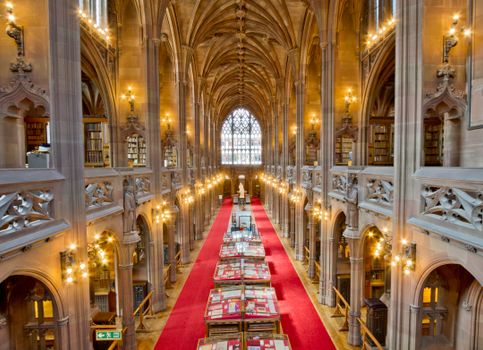
For a truly dramatic, almost ecclesiastical "Hogwarts" vibe, look no further than the John Rylands Library in Manchester. This late-Victorian Gothic Revival building, opened in 1900, looks more like a grand cathedral than a library. Its dark red sandstone exterior, intricate carvings, and soaring vaulted ceilings immediately transport you to another era. Inside, the main reading room is a breathtaking space with stained-glass windows, ornate wooden carvings, and a silent, reverent atmosphere that makes you feel like you've stumbled upon a secret society's meeting place. It houses an extraordinary collection of rare books and manuscripts, including one of the earliest fragments of the New Testament.
My Anecdote:
Walking through the heavy, ornate doors felt like stepping back in time. The light filtering through the stained-glass windows cast colorful patterns on the stone floor, and the silence was so profound it almost hummed. I found a quiet corner in the main reading room and simply sat, soaking in the atmosphere. I imagined scholars from centuries past poring over ancient texts, and felt a deep connection to the enduring pursuit of knowledge in such a magnificent setting. It felt like a truly hidden gem, a magical secret in the heart of a bustling city.
Practical Tips:
* Location: 150 Deansgate, Manchester M3 3EH, UK.
* Admission: Free.
* Booking: No booking required for general entry. Check their website for special exhibitions or events.
* Best Time to Visit: Weekdays, particularly mid-morning or late afternoon, to enjoy the quietest moments.
* Photography: Allowed for personal use, no flash. Be respectful of other visitors and researchers.
* Accessibility: Fully accessible with ramps and lifts.
* Nearby: Located in Manchester city center, close to shopping, restaurants, and other cultural attractions.
How to Plan Your Own Magical Library Pilgrimage
Ready to trade your muggle life for a literary adventure? Here's how to make your "Hogwarts library" dreams a reality:
- Research is Your Wand: Before you go, dive deep into the library's website. Check opening hours (which can change seasonally or for special events), admission fees, and any specific rules. Some libraries, like Strahov, require a small fee for photography, which is well worth it!
- Book Ahead, Always: For popular destinations like Trinity College, timed entry tickets are a must. They sell out fast, so secure your spot weeks, or even months, in advance. This saves you disappointment and long queues.
- Respect the Hallowed Halls: These are active research institutions and historical treasures. Maintain a respectful silence, especially in reading rooms. Handle any accessible artifacts with extreme care (if permitted). Remember, you're a guest in a sacred space of knowledge.
- Master the Art of Photography: While most libraries allow photos without flash, always double-check. Avoid using tripods unless explicitly permitted. Focus on capturing the grandeur without disrupting others. Early mornings or late afternoons often offer the best light and fewer crowds for those perfect, ethereal shots.
- Budget Wisely: Factor in not just admission fees, but also travel to and from the locations. Some, like Admont Abbey, are a bit off the beaten path and might require a rental car or specific train connections.
- Combine Your Passions: Weave these library visits into a broader itinerary. Explore the city's other attractions, indulge in local cuisine, and find charming bookshops nearby to extend your literary journey. Imagine visiting the John Rylands Library and then popping into a cozy Manchester café with a new book!
- Dress the Part (Optional, but Fun!): While not required, embracing a "Dark Academia" aesthetic with a smart blazer, cozy scarf, or vintage-inspired attire can add to the fun of your photos and truly immerse you in the experience.
Beyond the Bookshelves: What Makes Them Truly Special
These libraries are more than just repositories of books; they are living testaments to human history, art, and the enduring power of knowledge. They represent centuries of intellectual endeavor, often surviving wars, revolutions, and the relentless march of time.
The history embedded in their walls is palpable. Imagine the monks, scholars, and thinkers who once walked these very floors, their minds alight with discovery. The architecture itself tells a story – of Baroque opulence designed to inspire awe in God's creation, or Gothic Revival grandeur meant to elevate the spirit.
But perhaps most importantly, they offer a sense of timelessness. In a rapidly changing world, these libraries stand as beacons of stability, connecting us to generations past and reminding us of the enduring value of learning. They invite quiet contemplation, encouraging us to slow down and reflect on the vastness of human thought.
And yes, they are incredibly Instagram-worthy. But beyond the likes and shares, the true magic lies in the feeling they evoke – a profound sense of wonder, inspiration, and a connection to something much larger than ourselves. They remind us that the greatest adventures often begin between the pages of a book, and sometimes, those pages lead us to places more magical than we ever dreamed possible.
Your Next Chapter Awaits!
There's a special kind of enchantment in discovering a place that feels like it exists only in your wildest dreams. These hidden Hogwarts libraries offer just that – a chance to step into a fantasy, to commune with history, and to be utterly spellbound by the sheer beauty of human endeavor. They are trending for a reason: they fulfill a deep-seated desire for magic, authenticity, and profound experiences.
So, fellow bookworms and adventurers, which of these enchanting libraries will be the first entry in your travel journal? Will you wander the Long Room of Trinity College, gaze up at the frescoes of Admont, or find solace in the Gothic grandeur of John Rylands? The world is full of hidden literary wonders, just waiting for you to turn the page.
Share your dream library pilgrimage in the comments below! And don't forget to share this post with your fellow magic-seeking travelers – let's inspire more bookish adventures!
---