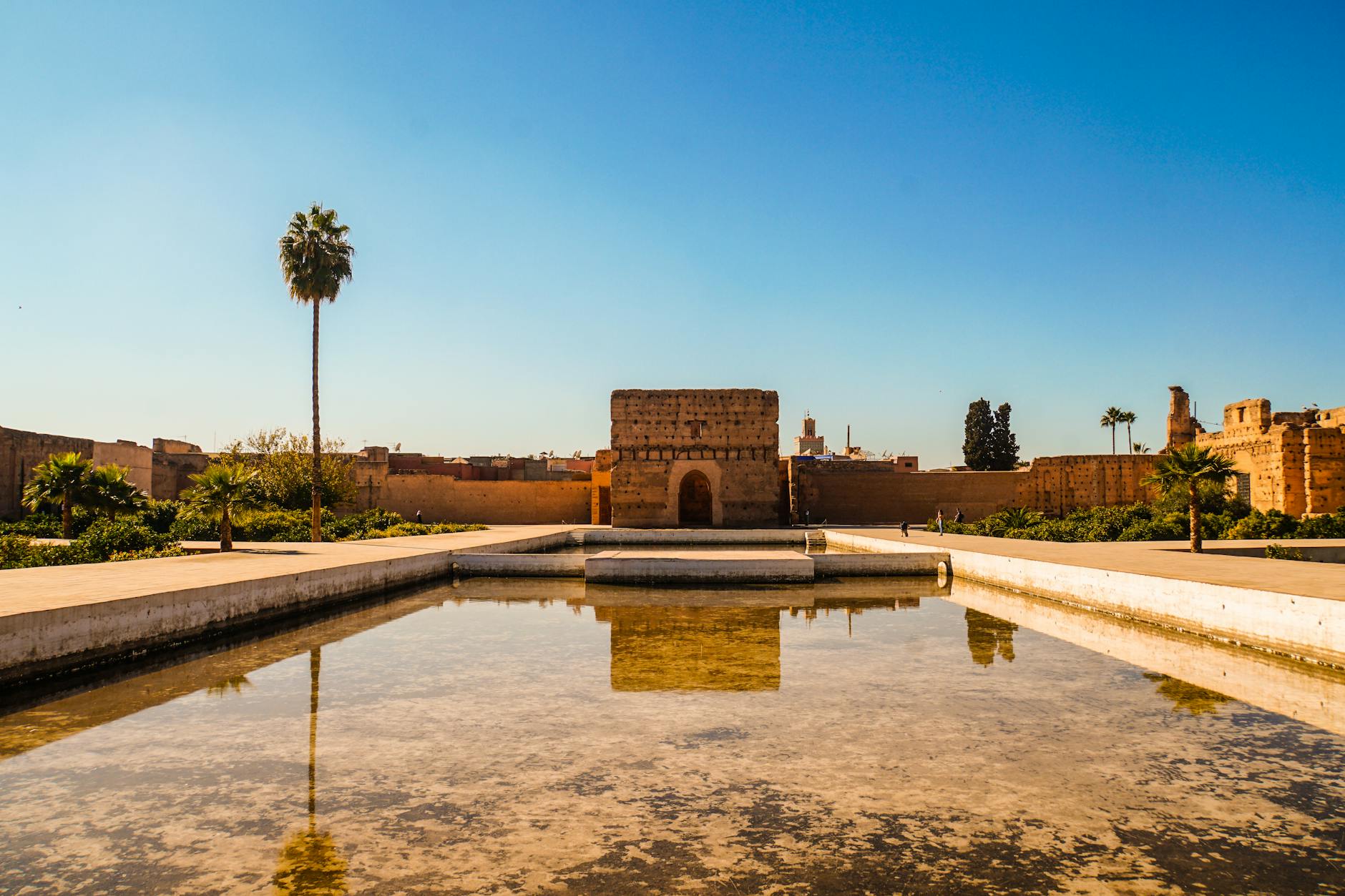
A well-planned 2 days in Marrakech itinerary allows you to experience the rich architectural heritage, traditional craft quarters, and culinary traditions of Morocco's fourth-largest city. Two full days provide adequate time to tour the southern palaces, explore the historic medina, visit iconic botanical gardens, and experience modern Moroccan dining. Because navigation within the narrow, pedestrianised alleyways requires extra travel time, pacing each day logically by neighbourhood is essential for an enjoyable visit.
2 days in Marrakech itinerary at a glance
All prices listed below are approximate averages in GBP (approx. £) and Moroccan Dirham (MAD). Entrance fees and transit fares are subject to change, so please check official ticketing platforms before your arrival.
| Day & Time | Focus Area | Highlights | Estimated Walking & Transit |
|---|---|---|---|
| Day 1 Morning | Kasbah District | Koutoubia Mosque exterior, Bab Agnaou, Saadian Tombs | 20–25 minutes total walking |
| Day 1 Afternoon | Mellah & Central Medina | Bahia Palace, Place des Épices, covered souks | 30–40 minutes total walking |
| Day 1 Evening | Jemaa el-Fna | Sunset terrace views, open-air food stalls, street entertainment | 10–15 minutes walking |
| Day 2 Morning | Majorelle & Modern Quarter | Jardin Majorelle, Musée Yves Saint Laurent, Pierre Bergé Museum | 15-minute taxi ride from Medina |
| Day 2 Afternoon | Northern Medina | Ben Youssef Madrasa, Maison de la Photographie | 20-minute taxi or 30-minute walk |
| Day 2 Evening | Gueliz (Ville Nouvelle) | Art galleries, French-colonial boulevards, contemporary dining | 10-minute taxi ride |
Day 1: Historic Medina, Palaces, and Jemaa el-Fna
Your first day focuses on the southern quarters of the old walled city, moving steadily north toward the primary market square as the afternoon transitions into dusk.
Morning: Kasbah and Saadian Tombs
Begin your morning around 08:30 at the Koutoubia Mosque, the city's most recognisable landmark. While non-Muslim visitors cannot enter the prayer hall, you can walk through the surrounding rose gardens and examine the 77-metre 12th-century Almohad minaret, which served as the architectural model for the Giralda in Seville.
From Koutoubia, take a 12-minute walk south along Avenue Hommane El Fatouaki toward Bab Agnaou, an imposing 12th-century stone gate that marks the entrance to the Kasbah district. Proceed five minutes further to the Saadian Tombs. Dating back to the reign of Sultan Ahmad al-Mansur in the late 16th century, this royal necropolis features intricate Italian Carrara marble columns and carved honeycomb plasterwork (muqarnas). Arrive right at opening to avoid queueing in the sun; entrance costs approx. £6 (70 MAD).
Afternoon: Bahia Palace, Mellah, and the Central Souks
From the Saadian Tombs, walk east for approximately 15 minutes through the Mellah (the historic Jewish quarter) toward the Bahia Palace. Built in the late 19th century for Grand Vizier Si Moussa and expanded by his son Ba Ahmed, this sprawling residence covers eight hectares. Take an hour to inspect its courtyards paved with zellij tiles, shaded gardens planted with citrus trees, and painted cedarwood ceilings. Standard entry is approx. £6 (70 MAD).
Exit the palace and walk 10 minutes north into Place des Épices (Rahba Kedima), a traditional market square historically dedicated to spice merchants. Stop for lunch at one of the elevated terraces overlooking the square. Order traditional Moroccan fare such as chicken pastilla (a spiced savoury-sweet pastry layered with almonds and cinnamon) or vegetable couscous, accompanied by fresh mint tea. Lunch typically costs approx. £8–£14 (90–160 MAD) per person.
Dedicate the next two hours to navigating the souks stretching north from the spice square. Souk Semmarine serves as the main artery, branching off into specialised artisan quarters: Souk Haddadine (blacksmiths), Souk Chouari (carpenters), and Souk el Attarine (brass lamps and spices). Keep to the right side of the alleys to allow delivery carts and mopeds to pass.
Pro tip: Download an offline map using an app like Maps.me or Google Maps before entering the souks. GPS signals can drift under the wooden lattice roofs, but offline maps reliably show main thoroughfares if you take an unintended turn.
Evening: Jemaa el-Fna and Tanjia Dinner
By 17:30, walk 10 minutes back toward Jemaa el-Fna, the central square that has functioned as an open-air gathering place since the 11th century. Head up to an upper-floor café balcony along the perimeter, order a mint tea (approx. £2 / 25 MAD), and watch the square transform as market stalls, musicians, storytellers, and food vendors assemble beneath the setting sun.
For dinner, descend into the square to sample grilled skewers, merguez sausages, and spiced harira soup from licensed stalls, or visit a nearby traditional restaurant. Be sure to order tanjia marrakchia, the city's signature dish: seasoned beef or mutton slow-cooked with preserved lemons, garlic, and cumin inside a clay urn placed in the embers of a local hammam furnace. An authentic dinner in this area costs approx. £10–£18 (110–200 MAD).
Day 2: Majorelle, Museums, and Modern Gueliz
The second day contrasts quiet visual arts and European-influenced garden architecture with medieval Islamic scholarship, before ending in Marrakech's modern district.
Morning: Jardin Majorelle and the Yves Saint Laurent Museum
Start your morning outside the old town walls in the Majorelle district. Take a petit taxi from the medina gates (approx. £3–£4 / 35–45 MAD, 15 minutes). Created over four decades by French painter Jacques Majorelle and later rescued and restored by fashion designer Yves Saint Laurent and Pierre Bergé, Jardin Majorelle features extensive collections of cacti, bamboo groves, water lilies, and distinctive cobalt-blue architectural accents.
Directly adjacent to the garden stands the Musée Yves Saint Laurent Marrakech, which displays an extensive permanent collection of haute couture garments alongside temporary contemporary exhibitions. Advance online booking is mandatory for both venues; time slots sell out days ahead. A combined ticket covering the garden, the YSL Museum, and the Pierre Bergé Museum of Berber Arts costs approx. £22–£25 (250–290 MAD).
Pro tip: Book the earliest entry time slot (08:30 or 09:00) online through the official ticketing portal. This guarantees you access to the garden paths before large tour groups arrive and before midday temperatures peak.
Afternoon: Ben Youssef Madrasa and Northern Medina
Take a 15-minute taxi back to the medina's northern edge near Bab Doukkala or Place Ben Youssef. Make your way to the Ben Youssef Madrasa, once the largest Islamic college in North Africa, founded in the 14th century and reconstructed by the Saadians in 1565. The central courtyard features a vast shallow pool, exquisite stuccowork, carved cedar lintels, and intricate geometric tiling. Entry is approx. £4.50 (50 MAD). Allocate 45 to 60 minutes to inspect the central hall and the tiny student dormitory rooms upstairs.
Walk three minutes east to the Maison de la Photographie, housed in a restored three-storey fondouk (caravanserai). This private institution displays an archival collection of vintage Moroccan photography spanning 1870 to 1950. Entry is approx. £4.50 (50 MAD). Take the stairs to the rooftop café for lunch, which serves simple daily tagines—such as chicken with green olives and preserved lemons—alongside sweeping views across the medina rooftops toward the High Atlas Mountains. Lunch costs approx. £7–£11 (80–130 MAD).
Evening: Gueliz Boulevards and Contemporary Dining
In the late afternoon, take a 10-minute taxi or a 30-minute walk west out of the medina along Avenue Mohammed V into Gueliz. Developed under the French Protectorate in the early 20th century, Gueliz features broad, grid-patterned avenues lined with Art Deco and mid-century architecture, independent boutiques, and contemporary art spaces.
Spend an hour visiting local galleries such as the Comptoir des Mines Galerie, a former industrial mining headquarters turned into an ambitious multi-floor contemporary art space. Finish your 48 hours with dinner at a modern Moroccan brasserie along Rue de la Liberté or Avenue Hassan II. These venues serve contemporary interpretations of classic regional recipes, such as slow-cooked lamb shoulder with prune glaze, alongside Moroccan wines from the Meknes region. Expect to spend approx. £20–£35 (230–400 MAD) per person for a full meal.
Where to stay in Marrakech
Selecting the right neighbourhood shapes your overall experience, balancing proximity to key attractions with comfort and quiet rest.
- Central Medina: Ideal for first-time travellers who want to step straight into the historic atmosphere. Staying in a restored riad (a traditional courtyard house) provides an intimate environment with internal garden courtyards. Streets here are pedestrian-only, meaning you will need to walk with your luggage from the nearest taxi drop-off point.
- Kasbah and Mellah: Located at the southern rim of the medina, these residential quarters are slightly quieter than the central souks while remaining within an easy 15-minute walk of Bahia Palace and Jemaa el-Fna. Taxi access is generally closer to riad front doors than in the central medina maze.
- Gueliz and Hivernage: The modern alternatives west of the historic walls. Gueliz offers wide pavements, European-style cafés, and modern boutique hotels. Hivernage is an upscale residential district known for luxury international hotel chains, landscaped avenues, and quiet nocturnal surroundings. Both are well-connected by taxis, which take roughly 10 minutes to reach the medina gates.
Getting around Marrakech
Marrakech has varied transport options, though most historic sights require travelling on foot.
- On Foot: Inside the medina, walking is the only viable method of travel because cars cannot enter the narrow alleys. Wear supportive, closed-toe walking shoes to handle uneven paving stones and cobbled surfaces.
- Petit Taxis: Small beige cars (Peugeot or Dacia models) that carry up to three passengers within city limits. Drivers are legally required to use the meter (compteur). If a driver refuses to turn it on, politely decline and hail another vehicle, or agree on a firm price before getting in. Typical short daytime fares between the Medina and Gueliz range between approx. £1.50 and £3 (15–35 MAD). Fares increase by 50% after 20:00.
- Airport Connections: Marrakech Menara Airport (RAK) sits roughly 6 kilometres southwest of the city centre. Bus Line 19 departs every 20 to 30 minutes, stopping at Jemaa el-Fna, Gueliz, and the central train station. A one-way bus ticket costs approx. £2.60 (30 MAD). Official airport taxis operate on fixed tariff schedules displayed on an electronic board outside the terminal, usually costing approx. £9–£13 (100–150 MAD) to medina drop-off points. Always verify the price with the driver before boarding.
Common mistakes to avoid
- Accepting unsolicited street directions: Individuals lingering near alleyway junctions often claim that a road or sight is closed, offering to lead you to another attraction or a leather tannery. Firmly say "Non, merci" and continue walking toward your destination using your offline map.
- Neglecting small cash denominations: Small stalls, public restrooms, and taxi drivers rarely have change for large 100 or 200 MAD banknotes. Break large notes at larger supermarkets, museums, or sit-down restaurants to ensure you always carry 10, 20, and 50 MAD notes and coins.
- Photographing performers without tipping: Street performers, snake charmers, and water sellers in Jemaa el-Fna expect immediate payment if you photograph them. If you take a picture, be prepared to pay a modest fee of approx. £1–£2 (10–20 MAD), or ask permission in advance.
- Skipping advance reservations for key sights: Jardin Majorelle and the Yves Saint Laurent Museum no longer sell on-site tickets at the door. Trying to purchase admission on arrival will result in turned-away entry.
- Disregarding modest dress standards: While Marrakech receives millions of visitors, Morocco is a conservative Muslim country. Covering shoulders and knees when exploring traditional medina quarters and historic religious structures shows cultural respect and reduces unwanted street attention.
Plan your trip
Organising a comprehensive short stay is straightforward when you align your visits by neighbourhood and book high-demand attractions early. Create your bespoke travel route and discover tailored accommodations across Morocco by visiting Tripsora.
Frequently asked questions
Is 2 days in Marrakech enough time?
Two days is sufficient to explore the primary historic landmarks, wander through the central souks, visit Jardin Majorelle, and experience Jemaa el-Fna. While a longer stay allows for day trips into the Atlas Mountains or Essaouira, 48 hours offers a solid introduction to the city itself.
How much money do I need for 2 days in Marrakech?
A mid-range budget of approx. £60 to £110 (650 to 1,200 MAD) per person per day covers museum entries, taxi transport, café lunches, and seated evening dinners. Accommodation costs vary widely depending on whether you choose a simple guesthouse or a high-end luxury riad.
What is the best month to visit Marrakech?
The most comfortable months are March through May and September through November, when daytime temperatures typically range from 20°C to 28°C. Midsummer months, particularly July and August, regularly exceed 40°C, making outdoor sightseeing physically demanding.
Is Marrakech safe for tourists walking around?
Marrakech is generally safe for international travellers, with violent crime remaining very rare. The primary concerns are petty theft, pickpocketing in crowded markets, and aggressive sales tactics from unofficial guides, all of which can be managed with situational awareness.
Can you drink tap water in Marrakech?
Tap water in urban Marrakech is treated and considered safe for locals, but foreign travellers usually prefer bottled, filtered, or boiled water to avoid stomach sensitivity. Ensure bottled water seals are intact before purchasing from street vendors.


